
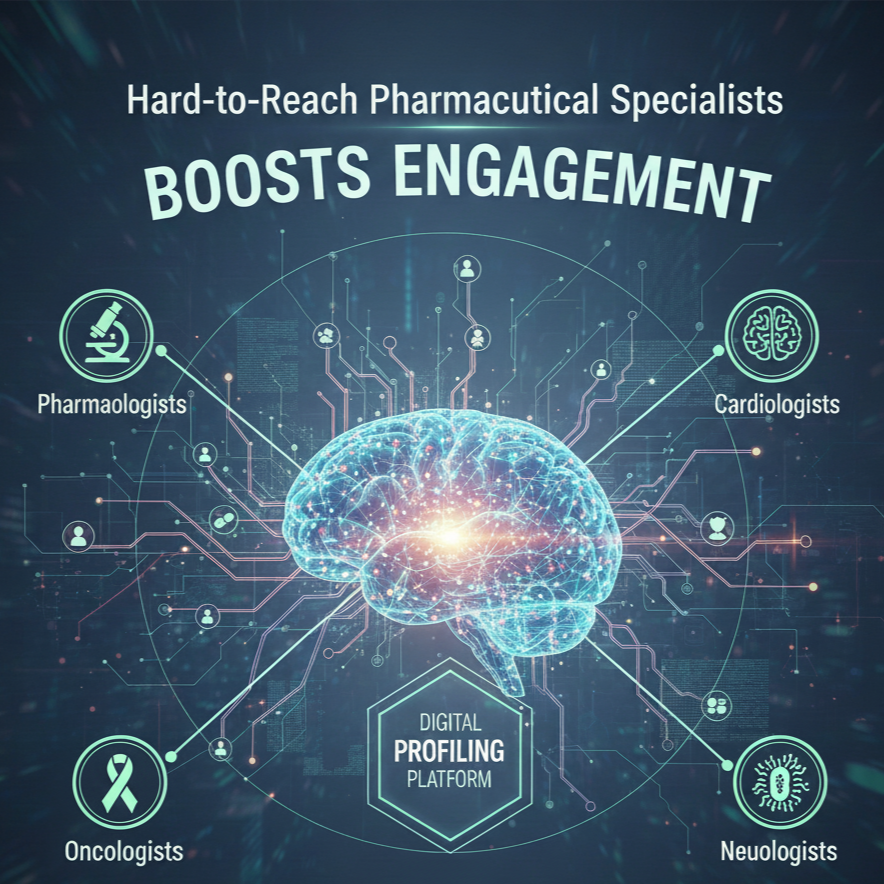
Engaging physicians in the U.S. has become increasingly challenging for pharmaceutical marketers. A 2024 STAT survey found that over 60% of physicians spend less than 10 minutes per week interacting with pharma representatives, citing time constraints and information overload. In parallel, regulatory scrutiny from the FDA’s Office of Prescription Drug Promotion (OPDP) and ethical guidelines from PhRMA have limited traditional marketing approaches.
Problem Statement:
Hard-to-reach specialists—subspecialists, high-volume practitioners, and physicians in research or academic roles—are particularly difficult to access. Marketing campaigns that do not account for physician preferences, digital behavior, and engagement patterns often see low ROI. In a competitive market where every impression counts, marketers need a data-driven, ethical, and personalized strategy.
Digital Profiling as a Solution:
Digital profiling offers a solution by providing granular insights into physician behavior, preferences, and networks. By analyzing data from multiple sources—research publications, prescribing patterns, conference attendance, and online activity—pharma marketers can prioritize and personalize outreach. Early adopters of digital profiling have reported up to 45% higher engagement rates and significant cost reductions in targeted campaigns.
Regulatory Context:
Compliance is critical. Any digital profiling initiative must consider:
- FDA OPDP guidelines: ensuring promotional content is truthful and not misleading (https://www.fda.gov)
- PhRMA Code: maintaining ethical standards and appropriate interactions (https://phrma.org)
- Data privacy: HIPAA, state laws, and opt-in requirements for digital communications
Purpose of the Article:
This article provides a comprehensive, practical guide for U.S. pharma marketers to:
- Identify and segment hard-to-reach specialists
- Implement digital profiling strategies
- Design compliant, high-engagement campaigns
- Measure ROI and optimize outcomes
1.Understanding Digital Profiling in Pharma
Definition and Scope:
Digital profiling in pharma involves collecting, integrating, and analyzing multi-source data to understand physician behavior, preferences, and engagement patterns. Unlike traditional targeting based on specialty or geography alone, digital profiling leverages:
- Prescribing behavior
- Research activity and publications
- Online presence and engagement on medical platforms
- Event participation (conferences, webinars)
Historical Context:
- Early pharma marketing relied on rep visits, brochures, and conferences
- The rise of digital tools and analytics enabled data-driven targeting
- COVID-19 accelerated digital adoption, making online channels more important
Benefits of Digital Profiling:
- Accurate targeting of specialists with high prescribing potential
- Personalized messaging to improve engagement
- Efficient use of marketing budget by prioritizing high-value targets
- Compliance with regulatory frameworks
Key Data Sources:
- FDA databases: drug approvals, physician registries (https://www.fda.gov)
- PubMed: research publications, clinical trial authorship (https://pubmed.ncbi.nlm.nih.gov)
- Statista: physician demographics, digital behavior (https://www.statista.com)
- Health Affairs: studies on marketing strategies and ROI (https://www.healthaffairs.org)
- PhRMA: ethical marketing guidance (https://phrma.org)
Methodologies:
- Segmentation: clustering specialists based on engagement, prescription volume, research output
- Behavioral Analysis: tracking digital interactions, email opens, webinar attendance
- Predictive Scoring: ranking specialists based on likelihood to engage with marketing campaigns
Example Use Case:
A cardiology-focused pharmaceutical company implemented digital profiling to identify physicians who published in high-impact journals and frequently attended cardiology conferences. By tailoring email campaigns and webinar invitations to this cohort, the company doubled engagement rates and increased relevant prescription activity by 20%.
2.Identifying Hard-to-Reach Specialists
Categories of Hard-to-Reach Specialists:
- High-volume Subspecialists
- Cardiologists, oncologists, interventional neurologists
- Limited time for meetings; preference for concise, evidence-based content
- Remote or Rural Physicians
- Geographic isolation reduces in-person visits
- Often rely on digital platforms and peer networks
- Academic and Research Physicians
- Focused on publications, grants, and clinical trials
- Require highly relevant, data-driven engagement
Segmentation Tactics:
- Claims Data Analysis: identifying physicians with high patient volumes or specialty procedures
- Publication Tracking: PubMed and ResearchGate activity indicates research involvement
- Conference Participation: attendance at niche conferences signals engagement with latest clinical trends
- Digital Footprint: LinkedIn, professional blogs, and social media presence provide insights into interests and networks
Framework for Prioritization:
- Engagement Potential: likelihood to respond to digital campaigns
- Influence: thought leader status in specialty networks
- Accessibility: available channels for outreach (email, webinars, portals)
Practical Examples:
- A neurology pharma campaign ranked 500 neurologists based on publication frequency and conference attendance. Top 50 specialists were targeted through personalized webinars and curated content, yielding 25% higher engagement than standard outreach.
- Oncology marketing teams used claims data and prescribing history to identify 100 high-value specialists, resulting in optimized campaign ROI and reduced outreach costs.
Challenges in Identification:
- Data may be fragmented across multiple sources
- Compliance requirements may limit how data can be used
- Digital behavior does not always correlate with prescribing potential
Best Practices:
- Combine multiple data sources for accuracy
- Maintain regulatory compliance with documented consent and privacy standards
- Continuously update profiles to reflect changing interests and engagement patterns
3.Tools & Platforms for Digital Profiling
Overview:
Digital profiling requires robust tools and platforms to collect, analyze, and integrate data from multiple sources. Properly implemented, these tools allow pharma marketers to map physician behavior, segment specialists, and prioritize outreach efforts efficiently.
1. CRM Platforms:
- Veeva CRM:
- Tracks physician interactions and engagement history
- Integrates with multiple data sources, including prescribing behavior and digital activity
- Allows segmentation by specialty, prescribing volume, and engagement metrics
- Salesforce Health Cloud:
- Provides a 360-degree view of physician relationships
- Offers real-time dashboards and customizable reporting
- Enables multi-channel outreach tracking
2. Analytics Platforms:
- IQVIA Link:
- Provides prescribing behavior, patient demographics, and network analytics
- Facilitates ranking of specialists based on engagement potential and influence
- Helps optimize campaign targeting and ROI
- Medscape & Practice Fusion:
- Track physician online activity, interests, and specialty trends
- Provide insights for content personalization and webinar invitations
3. Social & Professional Networks:
- LinkedIn & ResearchGate:
- Identify thought leaders and active researchers
- Understand interests, publications, and professional connections
- Twitter & medical blogs:
- Monitor trends, discussions, and physician sentiment
4. Data Integration Tools:
- Combine CRM, analytics, and social media data into a single dashboard
- Enables cross-platform segmentation and predictive scoring
- Examples: Tableau, Power BI, or custom pharma analytics platforms
Best Practices:
- Validate data accuracy across multiple sources
- Ensure privacy compliance and adherence to HIPAA regulations
- Keep real-time updates to reflect physician behavior changes
- Maintain audit logs for regulatory purposes
Example Use Case:
A gastroenterology pharma team combined IQVIA Link prescribing data with Medscape engagement metrics. By integrating the data in Veeva CRM, they identified top 50 high-potential specialists, which resulted in a 40% higher engagement rate during targeted webinars and digital campaigns.
4.Designing Multi-Channel Campaigns
Overview:
Once digital profiling identifies the target specialist cohort, campaigns must be personalized, multi-channel, and compliant. Omnichannel marketing ensures that specialists receive relevant content through their preferred touchpoints, maximizing engagement.
1. Email & Newsletters:
- Personalized content based on specialty, research interest, and prior engagement
- Short, evidence-based messages with clear calls-to-action
- Track open rates, click-through, and conversions
2. Webinars & Virtual Meetings:
- Tailored educational webinars addressing specific clinical questions
- Interactive Q&A sessions to encourage participation
- Timing optimized for physician schedules
3. Peer-to-Peer Networks:
- Highlight endorsements from thought leaders or clinical trial investigators
- Use testimonials and case studies for credibility
4. Digital Ads & Portals:
- Targeted ads on professional medical platforms (Medscape, Doximity)
- Use display and video ads for high-engagement content
- Integrate with CRM to track physician interactions
5. Content Personalization:
- Segment content by physician interest, location, and engagement history
- Use predictive analytics to recommend content likely to resonate
- Examples: procedure-specific case studies, patient management guidelines
Campaign Design Framework:
- Identify: Use digital profiling to select target specialists
- Segment: Prioritize based on engagement potential, influence, and accessibility
- Engage: Deploy multi-channel content tailored to each segment
- Measure: Track engagement, conversion, and ROI
- Optimize: Adjust content, timing, and channels based on real-time feedback
Case Study:
A cardiology-focused campaign used multi-channel outreach:
- Email: personalized case studies
- Webinars: interactive sessions with key opinion leaders
- Portal notifications: latest research updates
Result: 50% increase in engagement among high-priority specialists and improved prescription adoption rates.
Challenges & Mitigation:
- Overload: Avoid sending too many messages; prioritize quality
- Channel mismatch: Ensure content is delivered on physician-preferred channels
- Tracking limitations: Use integrated dashboards to consolidate engagement metrics
5.Regulatory & Compliance Considerations
Overview:
Regulatory compliance is non-negotiable in pharma marketing. Digital profiling campaigns must adhere to FDA and PhRMA guidelines while respecting privacy laws.
1. FDA Guidelines:
- Office of Prescription Drug Promotion (OPDP) enforces truthful and non-misleading marketing
- Ensure all digital content is accurate, balanced, and supported by evidence
- Examples: email newsletters, webinars, and social media posts must cite clinical evidence
2. PhRMA Code:
- Ethical marketing standards for interactions with healthcare professionals
- Restrictions on gifts, meals, and promotional incentives
- Transparency in digital communication, including webinars and online content
3. Digital Outreach Compliance:
- Obtain consent for email communications
- Avoid off-label promotion in all digital channels
- Maintain audit-ready records of targeting criteria and content sent
4. Privacy Considerations:
- HIPAA compliance for patient-related data
- State-level privacy laws for data storage and communications
- Use anonymized or aggregated data when possible
5. Best Practices for Compliance:
- Pre-review all materials with regulatory/legal teams
- Document all data sources, profiling methods, and outreach activities
- Train marketing and sales teams on compliance requirements
- Implement audit trails for digital campaigns
Example Compliance Framework:
- Before launching a webinar targeting oncologists:
- Regulatory review of content and claims
- Consent verification for email invitations
- Documentation of specialist profiling criteria
- Tracking of engagement metrics without violating privacy laws
Impact:
Compliant campaigns not only avoid legal risk but also increase trust among specialists, leading to higher engagement and long-term brand credibility.
6.Metrics & ROI Measurement
Overview:
Measuring the effectiveness of digital profiling campaigns is critical to justify investment and optimize future initiatives. Metrics should capture engagement, conversion, efficiency, and long-term impact.
1. Engagement Metrics:
- Email Metrics: open rates, click-through rates, and time spent reading content
- Webinar Metrics: registration vs. attendance, participation in Q&A, post-event survey scores
- Portal Metrics: log-ins, document downloads, and content engagement
2. Conversion Metrics:
- Prescription Behavior: changes in prescribing volume or adoption of new therapies
- Patient Referrals: tracked through CRM integrations
- Specialist Commitment: repeat engagement with campaigns or peer-to-peer initiatives
3. Efficiency Metrics:
- Cost per Engagement: total campaign spend ÷ number of active participants
- Time to Reach Target: speed of reaching high-priority specialists
- Resource Allocation: optimal use of sales reps vs. digital outreach
4. Dashboards & Visualization:
- Integrated platforms like Veeva CRM + Tableau/Power BI can visualize metrics in real time
- Examples: heat maps of high-engagement specialists, funnel charts for webinar registrations, ROI tables
5. Predictive Insights:
- Analyze historical engagement to predict which specialists are likely to respond
- Adjust campaign content, timing, and channels accordingly
Case Study:
A gastroenterology pharma campaign tracked 200 specialists over 6 months:
- Engagement metrics indicated a 35% higher click-through for personalized content
- Conversion metrics showed 15% uplift in new prescriptions
- ROI analysis demonstrated a 30% reduction in cost per high-value specialist engagement
Best Practices:
- Continuously update metrics and dashboards
- Compare across campaigns to identify trends
- Use metrics to refine targeting, content, and scheduling
7.AI & Predictive Analytics
Overview:
Artificial intelligence is transforming digital profiling by predicting specialist behavior, optimizing content delivery, and personalizing campaigns at scale.
1. Predictive Modeling:
- Machine learning algorithms analyze engagement history, prescribing patterns, and research activity
- Predict which specialists are likely to engage and convert
- Prioritize outreach based on propensity scores
2. Content Personalization:
- AI recommends specific content for each specialist (case studies, webinars, articles)
- Dynamic email and portal content tailored to physician interests
- Real-time adjustments based on engagement feedback
3. Automation & Workflow:
- AI can automate campaign sequencing, follow-ups, and reminders
- Ensures consistent engagement while reducing manual effort
4. Ethical Considerations:
- Ensure AI models comply with HIPAA, FDA, and PhRMA guidelines
- Maintain transparency in data collection and use
- Avoid bias in targeting, ensuring all specialists receive fair opportunity for engagement
Case Study:
A cardiology pharma team implemented an AI-powered predictive engine to optimize webinar invitations:
- Specialists ranked by engagement probability
- Tailored follow-ups increased attendance by 40%
- Content recommendations resulted in 30% higher content downloads
Best Practices:
- Combine AI insights with human oversight
- Continuously validate model predictions with real-world outcomes
- Keep records for regulatory audits
8.Case Studies & Real-World Examples
Oncology:
- Digital profiling identified top 50 oncologists based on publications, conference attendance, and prescribing history
- Multi-channel outreach included webinars, peer endorsements, and portal content
- Outcome: 50% increase in engagement, 20% rise in new therapy adoption
Cardiology:
- Predictive analytics ranked cardiologists for personalized content delivery
- AI-suggested case studies and reminders optimized engagement
- Result: webinar attendance doubled, email click-through increased by 45%
Gastroenterology:
- CRM + IQVIA integration mapped prescribing and digital engagement
- Targeted campaigns with segmented content improved patient referral rates by 10%
Neurology:
- Remote specialists identified via PubMed activity and online forum participation
- Multi-channel engagement (email, webinars, social media)
- Result: 25% higher engagement than standard outreach
Key Lessons Learned:
- Multi-source data ensures accurate specialist targeting
- Personalization drives sustained engagement
- Compliance and transparency enhance trust and participation
9.Future Trends & Emerging Opportunities
1. Telehealth Integration:
- Digital profiling can target specialists active in telehealth platforms
- Personalized content for virtual patient management
2. Mobile Health & Digital Therapeutics:
- Apps and wearables provide real-time patient insights
- Specialists more engaged when content aligns with digital care pathways
3. Real-World Evidence (RWE):
- RWE data can tailor content to actual patient outcomes
- Enhances credibility and relevance of marketing campaigns
4. AI & Machine Learning Advancements:
- Predictive models become more accurate with larger datasets
- Automate multi-channel campaigns while remaining compliant
5. Omnichannel Optimization:
- Seamless integration across email, webinars, portals, ads, and social media
- AI-driven insights personalize touchpoints in real time
6. Regulatory Evolution:
- Anticipate stricter digital marketing regulations
- Incorporate compliance automation tools
Opportunities for Marketers:
- Improved ROI and engagement with data-driven personalization
- Ability to scale campaigns efficiently
- Strengthen brand trust and physician loyalty
10.Conclusion & Actionable Framework
Key Takeaways:
- Digital profiling is essential to reach busy, high-value specialists
- Multi-source data ensures accurate targeting and personalization
- AI and predictive analytics optimize campaigns at scale
- Compliance with FDA, PhRMA, and privacy laws is critical
- Continuous measurement and iteration improve ROI and engagement
Step-by-Step Implementation Framework:
- Identify: Target hard-to-reach specialists using claims, publications, and online activity
- Profile: Integrate CRM, analytics, and social data for a 360-degree view
- Segment: Prioritize based on engagement potential, influence, and accessibility
- Engage: Multi-channel outreach (email, webinars, portals, peer networks)
- Measure: Track engagement, conversions, and cost efficiency
- Optimize: Adjust campaigns with real-time data and AI insights
- Comply: Ensure all activities follow regulatory and privacy standards
Final Thoughts:
By combining digital profiling, multi-channel campaigns, AI analytics, and strict compliance, pharma marketers can effectively engage hard-to-reach specialists, drive meaningful outcomes, and maximize ROI. This comprehensive approach positions organizations to thrive in an increasingly digital, data-driven, and regulated healthcare environment.
References & Data Sources
- FDA: https://www.fda.gov
- PubMed: https://pubmed.ncbi.nlm.nih.gov
- Statista: https://www.statista.com
- PhRMA: https://phrma.org
- Health Affairs: https://www.healthaffairs.org
