
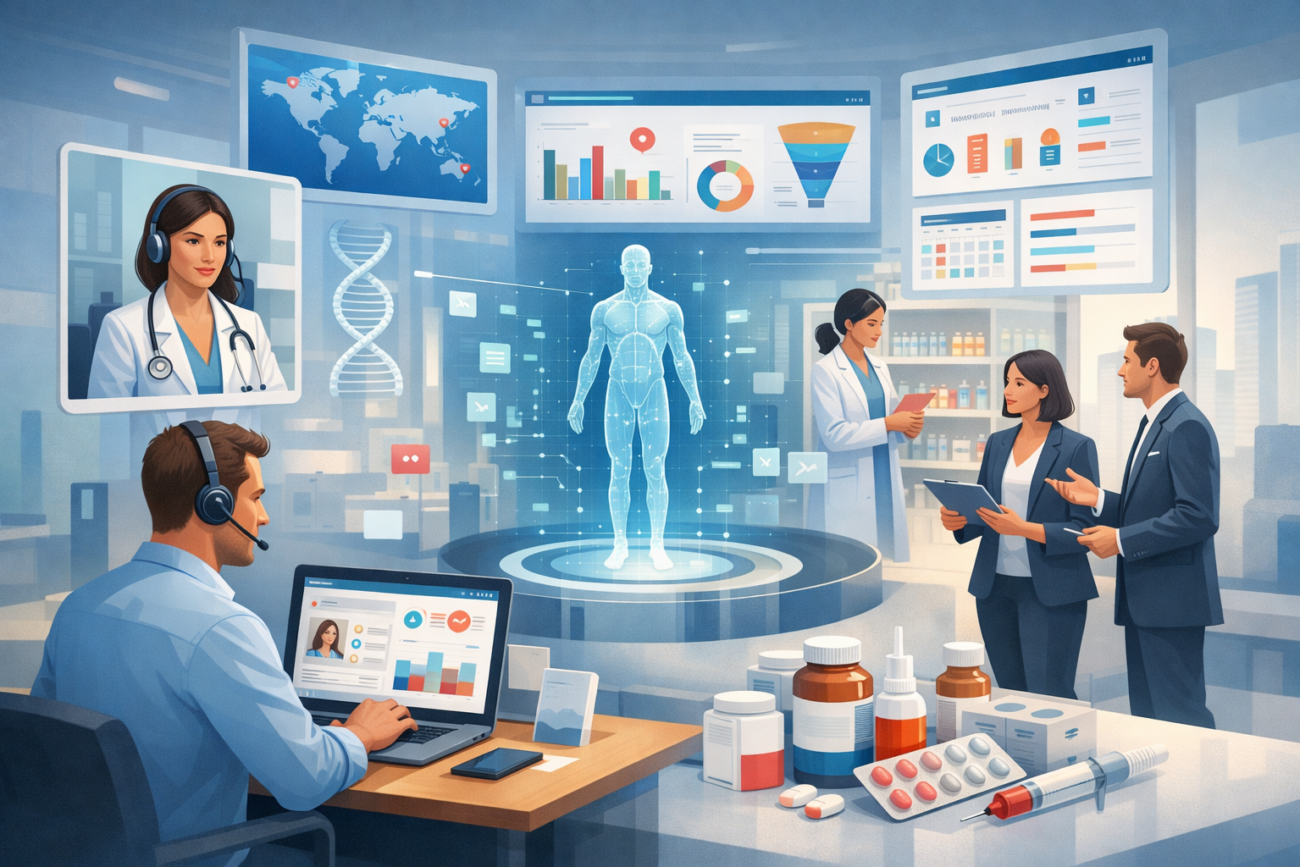
The pharmaceutical industry operates in a highly complex and competitive environment where effective communication with healthcare professionals is essential for commercial success. Pharmaceutical companies rely on strong relationships with physicians, hospitals, and healthcare organizations to ensure that new therapies reach the patients who need them. However, managing these relationships across large markets and multiple stakeholders has traditionally been a major challenge for pharma sales teams.
In the past, pharmaceutical sales representatives primarily depended on manual processes, fragmented databases, and in-person visits to track physician interactions and manage customer relationships. This approach often resulted in incomplete data, limited visibility into physician preferences, and inefficient coordination between sales, marketing, and medical affairs teams.
Modern Customer Relationship Management (CRM) systems are transforming how pharmaceutical companies manage these relationships. CRM platforms provide a centralized system where sales representatives can track interactions with healthcare professionals, monitor engagement patterns, and access relevant information about physicians, hospitals, and prescribing trends. By organizing large volumes of data into a structured and accessible format, CRM systems allow pharmaceutical companies to better understand their customers and deliver more targeted communication.
In addition to improving relationship management, CRM systems also enhance collaboration across different departments within pharmaceutical organizations. Sales teams, marketing specialists, and medical affairs professionals can share insights and coordinate their strategies using a single integrated platform. This alignment helps ensure that physicians receive consistent and relevant information about therapies, clinical evidence, and patient support programs.
The growing adoption of digital tools in healthcare has further increased the importance of CRM systems. Many pharmaceutical companies now use CRM platforms to manage omnichannel engagement, combining in-person meetings with virtual interactions, email communication, webinars, and digital educational resources.
As the pharmaceutical industry continues to evolve, modern CRM systems are becoming a critical component of data-driven sales strategies. By improving visibility into customer interactions, enabling personalized engagement, and supporting cross-functional collaboration, CRM platforms are helping pharmaceutical companies strengthen physician relationships and improve overall commercial performance.
1.Limitations of Traditional Pharma Sales Approaches
Before the adoption of modern CRM systems, pharmaceutical sales operations relied heavily on traditional relationship-based selling methods. Sales representatives primarily built connections with physicians through in-person visits, medical conferences, and product presentations. While these methods helped establish personal relationships, they also created several operational limitations that made it difficult for companies to manage sales activities efficiently.
One major challenge was the lack of centralized data management. Sales representatives often recorded physician interactions using spreadsheets, handwritten notes, or disconnected internal systems. Because this information was not stored in a unified platform, it was difficult for organizations to track engagement history, identify prescribing trends, or understand how physicians responded to marketing efforts. As a result, companies had limited visibility into the effectiveness of their sales strategies.
Another limitation was the inefficient coordination between different departments within pharmaceutical companies. Sales teams, marketing departments, and medical affairs professionals frequently worked with separate datasets and communication channels. This fragmentation made it challenging to ensure that healthcare professionals received consistent and accurate information about therapies, clinical evidence, and patient support programs.
Traditional sales models also struggled with limited scalability. Pharmaceutical companies often manage relationships with thousands of physicians across different regions. Without digital systems to organize and analyze customer information, sales representatives had to rely on personal memory or incomplete records when planning follow-up visits and communications. This approach made it difficult to prioritize high-value physicians or tailor engagement strategies effectively.
In addition, traditional sales strategies lacked real-time insights and performance tracking. Managers had limited ability to monitor field activities, measure engagement outcomes, or adjust strategies based on data. Sales reporting processes were often slow and manual, delaying decision-making and reducing overall operational efficiency.
Regulatory compliance also posed challenges under traditional systems. Pharmaceutical companies must follow strict regulations governing interactions with healthcare professionals. Without structured systems to track communications and documentation, ensuring compliance with industry guidelines became more complex.
These limitations highlighted the need for more advanced tools that could organize large volumes of data, improve coordination between teams, and provide actionable insights into customer engagement. Modern CRM systems were developed to address these challenges and enable pharmaceutical companies to adopt more data-driven, efficient, and compliant sales strategies.
2.What CRM Systems Are and How They Work in the Pharmaceutical Industry
Customer Relationship Management (CRM) systems are digital platforms designed to help organizations manage and analyze interactions with customers. In the pharmaceutical industry, CRM systems are specifically tailored to manage relationships with healthcare professionals (HCPs), hospitals, clinics, and other healthcare stakeholders. These systems serve as centralized databases where sales representatives and other teams can record, track, and analyze all interactions with healthcare providers.
At their core, CRM platforms collect and organize large volumes of information related to physician engagement. This may include details such as physician specialties, prescribing patterns, previous interactions with sales representatives, participation in medical events, and responses to marketing campaigns. By consolidating this information into a single system, CRM tools allow pharmaceutical companies to gain a clearer understanding of their customer relationships.
Sales representatives use CRM platforms to plan and document their interactions with physicians. For example, after meeting a doctor, a representative can record key discussion points, product feedback, and follow-up actions within the system. This information becomes part of the organization’s shared database, allowing other team members to access relevant insights and maintain continuity in communication.
Modern CRM systems also integrate with various digital engagement channels. Pharmaceutical companies increasingly use CRM platforms to coordinate omnichannel communication strategies, combining in-person visits with email campaigns, webinars, virtual meetings, and digital medical education resources. This integration ensures that healthcare professionals receive consistent and coordinated information across multiple communication channels.
Another important feature of CRM platforms is data analytics and reporting capabilities. These systems can generate insights about physician engagement patterns, sales performance, and campaign effectiveness. Sales managers can analyze this data to identify high-priority healthcare providers, optimize territory planning, and adjust engagement strategies to improve outcomes.
In addition, many CRM platforms include compliance management tools that help pharmaceutical companies adhere to industry regulations governing interactions with healthcare professionals. By automatically documenting communications and promotional activities, CRM systems create clear audit trails that support regulatory transparency.
Through these capabilities, CRM systems enable pharmaceutical companies to move from traditional relationship-based selling toward more structured, data-driven engagement strategies. By improving visibility into customer interactions and supporting coordinated communication across teams, CRM platforms play a critical role in modernizing pharmaceutical sales operations.
3.Key Benefits of CRM Systems in Pharmaceutical Sales
The adoption of modern CRM systems has significantly improved how pharmaceutical companies manage their sales operations and relationships with healthcare professionals. By organizing large volumes of data and enabling real-time insights, CRM platforms provide several important benefits that enhance both efficiency and strategic decision-making.
One of the most significant advantages is improved visibility into customer interactions. CRM systems allow pharmaceutical companies to track every interaction between sales representatives and healthcare professionals, including meetings, emails, event participation, and feedback from physicians. This comprehensive view of engagement history helps organizations better understand physician preferences, interests, and prescribing behaviors.
Another key benefit is enhanced personalization of communication. Physicians often receive information from multiple pharmaceutical companies, making it important for sales teams to deliver relevant and meaningful content. CRM platforms analyze engagement data and help sales representatives tailor their conversations based on the physician’s specialty, treatment focus, and previous interactions. Personalized communication improves the likelihood of meaningful engagement and strengthens professional relationships.
CRM systems also improve coordination between different departments within pharmaceutical companies. Sales teams, marketing professionals, and medical affairs specialists can access shared data through the CRM platform, allowing them to align their messaging and strategies. This coordinated approach ensures that healthcare professionals receive consistent and accurate information across various touchpoints.
Another major advantage is data-driven decision-making. CRM platforms provide analytics and reporting tools that help organizations evaluate the effectiveness of their sales strategies. Managers can analyze metrics such as physician engagement levels, territory performance, and campaign outcomes to identify opportunities for improvement. These insights allow companies to allocate resources more efficiently and focus on high-impact activities.
Operational efficiency is also greatly improved through CRM systems. Automated scheduling, reporting tools, and digital documentation reduce the administrative workload for sales representatives. Instead of spending time on manual data entry or paperwork, representatives can focus more on building meaningful relationships with healthcare professionals.
Additionally, CRM systems support regulatory compliance and transparency. Pharmaceutical companies must adhere to strict regulations regarding interactions with healthcare professionals and promotional activities. CRM platforms create detailed records of communications and activities, ensuring that companies maintain accurate documentation and comply with industry guidelines.
Overall, the implementation of CRM systems enables pharmaceutical companies to adopt more organized, data-driven, and efficient sales strategies, strengthening their ability to engage healthcare professionals and support the adoption of innovative therapies.
4.Omnichannel Engagement Through CRM Systems
The way pharmaceutical companies interact with healthcare professionals has changed significantly in recent years. Physicians today rely on multiple sources of information, including digital platforms, medical journals, webinars, and professional networks. As a result, pharmaceutical sales strategies must go beyond traditional face-to-face meetings and adopt omnichannel engagement models. Modern CRM systems play a critical role in enabling this transformation.
Omnichannel engagement refers to the coordinated use of multiple communication channels to interact with healthcare professionals in a seamless and consistent manner. These channels may include in-person meetings, email communications, virtual conferences, online medical education platforms, and digital marketing campaigns. CRM systems help pharmaceutical companies manage and integrate these channels within a single platform.
By capturing data from various engagement points, CRM platforms provide a complete view of physician interactions. For example, a sales representative can see whether a physician attended a recent webinar, opened an educational email, or downloaded clinical research materials. This information allows the representative to tailor future conversations based on the physician’s interests and level of engagement.
CRM systems also enable better timing and coordination of communication efforts. Instead of sending generic promotional messages, pharmaceutical companies can schedule targeted outreach based on physician behavior and preferences. For instance, a physician who frequently engages with digital content may prefer receiving clinical updates via email or online platforms, while another may prefer in-person discussions.
Another advantage of omnichannel engagement is improved continuity of communication. Different teams within pharmaceutical companies-such as sales representatives, marketing specialists, and medical affairs professionals-often interact with the same healthcare professionals. CRM systems ensure that all interactions are documented and accessible, allowing teams to coordinate their communication strategies and avoid repetitive or inconsistent messaging.
The use of omnichannel engagement also helps pharmaceutical companies adapt to changes in the healthcare environment. Events such as global health crises have demonstrated the importance of maintaining digital communication channels when in-person interactions become limited. CRM platforms allow companies to quickly shift between communication modes while maintaining strong relationships with healthcare professionals.
Through effective omnichannel strategies supported by CRM systems, pharmaceutical companies can deliver more relevant information, strengthen physician relationships, and improve the overall effectiveness of their sales and engagement efforts
5.Data Analytics and Insights Generated by CRM Systems
One of the most transformative capabilities of modern CRM systems in the pharmaceutical industry is their ability to generate data-driven insights. Pharmaceutical companies interact with thousands of healthcare professionals across multiple regions, and managing these relationships effectively requires a deep understanding of engagement patterns, prescribing behaviors, and market trends. CRM systems collect and analyze large volumes of data to help organizations make more informed decisions.
CRM platforms capture information from multiple touchpoints, including sales visits, emails, webinars, medical conferences, and digital content interactions. By analyzing this data, companies can gain insights into how physicians prefer to receive information, what type of content they engage with most frequently, and which therapies are generating the most interest. These insights help sales teams tailor their engagement strategies to better match physician needs.
Another important application of CRM analytics is territory and performance management. Sales managers can use CRM data to evaluate how representatives are performing across different regions and identify opportunities for improvement. Metrics such as frequency of physician visits, engagement levels, and response to promotional campaigns provide valuable information for optimizing sales strategies.
CRM analytics also help pharmaceutical companies identify high-value healthcare professionals. Some physicians play a key role in influencing prescribing decisions, participating in clinical research, or educating peers about new therapies. By analyzing engagement data, companies can identify these influential healthcare professionals and develop targeted communication strategies to strengthen relationships with them.
Predictive analytics is another emerging feature within modern CRM systems. Advanced algorithms can analyze historical engagement data and forecast potential outcomes, such as which physicians are more likely to adopt a new therapy or respond to specific marketing initiatives. These predictive insights allow pharmaceutical companies to allocate resources more efficiently and focus on the most promising opportunities.
In addition to supporting sales strategies, CRM analytics also contribute to better coordination between sales, marketing, and medical affairs teams. When different departments share access to the same data insights, they can align their activities and develop more cohesive engagement strategies for healthcare professionals.
Overall, the analytical capabilities of CRM systems enable pharmaceutical companies to move beyond intuition-based decision-making and adopt more strategic, evidence-based approaches to managing physician relationships and driving commercial success.
6.CRM Systems and Regulatory Compliance in Pharmaceutical Sales
The pharmaceutical industry operates under strict regulatory frameworks that govern how companies interact with healthcare professionals. Regulations are designed to ensure that promotional activities remain ethical, transparent, and based on accurate scientific information. In this environment, maintaining compliance while managing large sales teams and extensive customer networks can be challenging. Modern CRM systems play an important role in helping pharmaceutical companies maintain regulatory compliance and accountability.
One of the primary ways CRM systems support compliance is through comprehensive documentation of interactions with healthcare professionals. Every meeting, email, presentation, or educational event involving a physician can be recorded within the CRM platform. This creates a detailed and organized record of communication activities, which can be reviewed during internal audits or regulatory inspections.
CRM systems also help ensure that approved promotional materials are used consistently. Pharmaceutical companies must follow strict guidelines regarding how medicines can be promoted, and all marketing content typically requires regulatory approval before distribution. By integrating approved materials into the CRM platform, companies can ensure that sales representatives only use compliant resources when engaging with healthcare professionals.
Another important compliance function is tracking financial interactions and event participation. In many countries, regulations require pharmaceutical companies to report certain financial relationships with healthcare professionals, such as payments for consulting services, speaking engagements, or educational events. CRM systems can record and manage these interactions, making it easier for companies to generate accurate transparency reports when required.
CRM platforms also assist in maintaining ethical communication practices. For example, some systems include automated alerts that notify managers if sales representatives attempt to share unapproved content or exceed permitted engagement limits. These safeguards help reduce the risk of regulatory violations and protect the company’s reputation.
Additionally, CRM systems improve internal coordination between compliance teams and sales departments. Compliance officers can monitor engagement activities and ensure that communication strategies align with regulatory standards. This proactive oversight helps organizations identify potential issues early and implement corrective actions when necessary.
By integrating compliance management into daily sales operations, CRM systems enable pharmaceutical companies to maintain high standards of ethical conduct while continuing to build strong relationships with healthcare professionals. This balance between effective sales engagement and regulatory responsibility is essential for long-term success in the pharmaceutical industry.
7.Future Trends in CRM Technology for Pharma Sales
As the pharmaceutical industry becomes more data-driven and digitally connected, CRM technology continues to evolve to meet the changing needs of sales and commercial teams. Future CRM systems are expected to incorporate advanced technologies that enable more intelligent, predictive, and personalized engagement with healthcare professionals.
One of the most important emerging trends is the integration of artificial intelligence (AI) within CRM platforms. AI can analyze large volumes of physician engagement data and identify patterns that may not be immediately visible to human analysts. For example, AI algorithms can suggest the optimal time for a sales representative to contact a physician, recommend relevant educational materials, or predict which healthcare professionals are most likely to adopt a new therapy.
Another significant trend is the increasing use of predictive analytics. By analyzing historical engagement data, prescribing trends, and market conditions, predictive models can forecast potential sales outcomes and guide strategic decision-making. Sales managers can use these insights to prioritize high-impact opportunities and allocate resources more effectively across different regions and therapeutic areas.
CRM systems are also becoming more integrated with real-world data and healthcare analytics platforms. By combining CRM data with information from electronic health records, prescription databases, and market research tools, pharmaceutical companies can gain deeper insights into treatment patterns and patient outcomes. This broader data ecosystem allows organizations to develop more informed commercial strategies.
Mobile technology is another key area of innovation. Modern CRM platforms increasingly offer mobile-first solutionsthat allow sales representatives to access physician data, update interaction records, and review performance metrics directly from smartphones or tablets. This flexibility improves efficiency for field representatives who spend much of their time outside traditional office environments.
In addition, future CRM systems will likely focus on improving physician experience and digital engagement. As healthcare professionals receive growing volumes of information from multiple sources, pharmaceutical companies must deliver communication that is relevant, timely, and easy to access. Advanced CRM tools will help personalize these interactions and reduce information overload.
Finally, cloud-based CRM platforms are becoming the industry standard. Cloud infrastructure allows pharmaceutical companies to scale their systems more easily, integrate with other digital tools, and ensure that data remains accessible to teams across different geographic locations.
These technological advancements are expected to transform CRM platforms from simple data management tools into intelligent systems that guide strategic engagement with healthcare professionals, ultimately helping pharmaceutical companies strengthen relationships and improve commercial performance.
Conclusion
Modern CRM systems have become an essential component of pharmaceutical sales and commercial strategy. As the healthcare environment grows more complex and digitally connected, pharmaceutical companies must manage relationships with a large network of healthcare professionals while ensuring that communication remains accurate, compliant, and relevant. CRM platforms provide the technological foundation that allows companies to organize customer data, track engagement activities, and coordinate communication across different teams.
By centralizing information about healthcare professionals, CRM systems enable pharmaceutical sales teams to develop more informed and personalized engagement strategies. Sales representatives can better understand physician preferences, tailor their discussions based on previous interactions, and deliver educational resources that are relevant to specific therapeutic areas. This data-driven approach helps strengthen professional relationships and improve the effectiveness of sales interactions.
CRM systems also support omnichannel engagement, allowing pharmaceutical companies to combine traditional face-to-face meetings with digital communication methods such as emails, webinars, and virtual conferences. This integrated approach ensures that healthcare professionals receive consistent information through the channels they prefer, improving both accessibility and engagement.
In addition, the analytical capabilities of CRM platforms provide valuable insights that guide strategic decision-making. By analyzing engagement patterns, sales performance metrics, and market trends, pharmaceutical companies can optimize their sales operations, allocate resources more efficiently, and identify opportunities for growth.
Regulatory compliance remains another important advantage of CRM systems. By documenting all interactions with healthcare professionals and ensuring the use of approved promotional materials, CRM platforms help organizations maintain transparency and adhere to industry regulations.
Looking ahead, emerging technologies such as artificial intelligence, predictive analytics, and cloud-based platforms will further enhance the capabilities of CRM systems. These innovations will allow pharmaceutical companies to adopt even more intelligent, personalized, and data-driven sales strategies.
Overall, modern CRM systems are transforming pharmaceutical sales by improving operational efficiency, strengthening physician relationships, and enabling companies to navigate the increasingly complex healthcare landscape with greater precision and effectiveness.
References
- U.S. Food and Drug Administration (FDA) – Guidelines on Pharmaceutical Promotion and Compliance
https://www.fda.gov - McKinsey & Company – Insights on Digital Transformation in Pharmaceutical Sales
https://www.mckinsey.com - Health Affairs – Research on Healthcare Marketing and Industry Trends
https://www.healthaffairs.org - PubMed – Studies on Pharmaceutical Sales Strategies and Healthcare Engagement
https://pubmed.ncbi.nlm.nih.gov
