
Primary Keyword: AI search pharma brand visibility
Search Is No Longer a List of Links. It Is Becoming a List of Answers.
Gartner predicts a 25 percent drop in traditional search engine usage by 2026. Many people in pharmaceutical marketing still treat this as a tech trend. It is a visibility crisis. When search engines stop showing ten blue links and start giving one AI-generated answer, your brand either appears inside that answer or disappears from the decision process entirely.
Pharma companies spent the last decade optimizing for Google rankings. The next decade will be about optimizing for AI-generated answers. This shift directly affects pharma brand visibility, patient education, doctor research behavior, and ultimately prescription demand.
If you work in pharma marketing, commercial strategy, or digital health, you need to understand one thing clearly. AI search does not work like traditional SEO. It does not rank pages the same way. It selects information, summarizes it, and presents a single synthesized answer. That changes how brands get discovered.
The question is no longer, “Are you ranking on Google?” The question is, “Is AI mentioning your brand when it generates an answer?”
From SEO to AEO: The New Visibility Model

Traditional SEO focused on ranking webpages. AI search focuses on extracting answers. This is why many digital strategists now use the term Answer Engine Optimization instead of Search Engine Optimization.
Here is the key difference:
Traditional search:
- User searches for a disease
- Google shows links
- User clicks a website
- Website communicates brand message
AI search:
- User asks a question
- AI generates an answer
- AI summarizes multiple sources
- User may never visit a website
This removes the middle step where pharma companies used to communicate through their websites.
In traditional SEO, traffic was the goal. In AI search, mention is the goal. If AI includes your drug, your clinical data, or your brand information in its generated answer, you are visible. If not, you are invisible even if your website ranks on page one.
This is why AI search pharma brand visibility is becoming a serious topic inside commercial and digital teams.
How Doctors and Patients Are Using AI Search
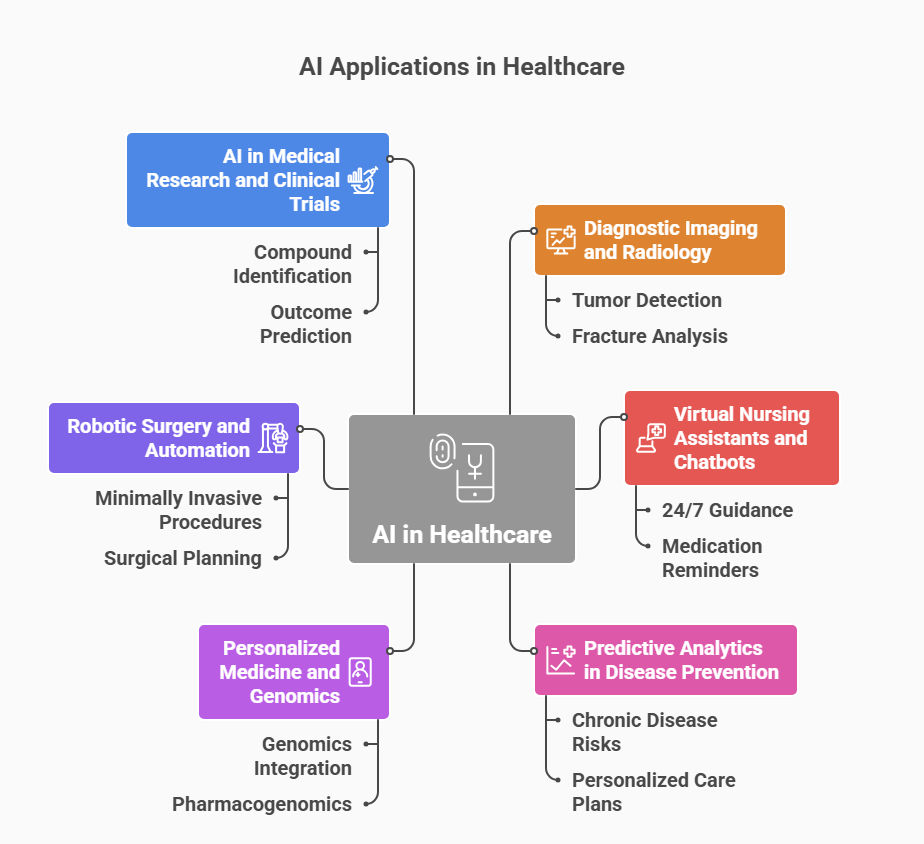
Patients are already using AI tools to understand symptoms, treatments, and drug side effects. Doctors are using AI tools to summarize research papers, review treatment guidelines, and compare therapies.
This changes how pharma information is discovered.
Earlier:
- Doctors visited pharma websites
- Doctors met sales reps
- Patients visited Google and clicked websites
Now:
- Doctors ask AI to summarize treatment options
- Patients ask AI about best treatments
- AI generates a summarized response
- That summary influences decisions
If your brand appears in AI-generated summaries, you influence the conversation. If your competitor appears and you do not, the market shifts quietly without you noticing immediately.
This is not a theory. This is already happening in healthcare information search behavior.
Why Pharma Brands Can Lose Visibility Even With Strong SEO
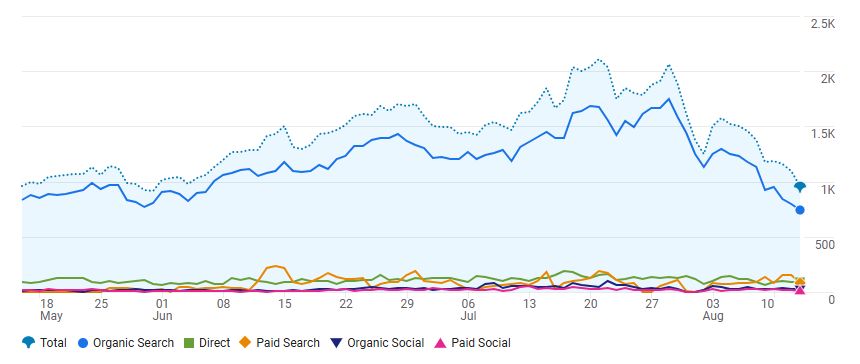
Many pharma companies invested heavily in SEO content between 2015 and 2023. They built large disease education websites, patient resources, and SEO blog content. These strategies worked because users clicked links.
AI search is creating what analysts call zero-click search. The user gets the answer directly and does not click any website.
This creates a visibility problem:
- Your content may be used to train AI
- AI may summarize your content
- But users may never visit your website
- Your analytics show traffic decline
- But your information is still influencing decisions
Traditional marketing teams may misinterpret this as a performance drop, when in reality it is a visibility shift.
Pharma companies need new metrics for AI search visibility such as:
- Brand mentions in AI answers
- Citation presence in AI-generated content
- Inclusion in AI treatment summaries
- Presence in AI-generated patient education
- AI chatbot recommendation frequency
This is a completely new measurement system.
The Content That AI Search Prefers

AI search engines prefer certain types of content. Pharma companies that understand this early will have an advantage.
AI systems prefer content that is:
- Structured clearly with headings
- Written in simple, clear language
- Fact-based and referenced
- Educational rather than promotional
- Focused on specific medical questions
- Long-form and detailed
- Regularly updated
- Written by credible sources
- Focused on patient or doctor questions
This creates an interesting shift in pharma marketing.
Educational content becomes more important than promotional content because AI systems prefer informative content when generating answers.
This means pharma companies may need to invest more in:
- Disease education content
- Treatment comparison content
- FAQ content
- Doctor discussion guides
- Patient journey content
- Clinical data explanation content
The companies that become the primary source of educational content will become the primary source for AI-generated answers.
GEO Targeting and AI Search in Pharma
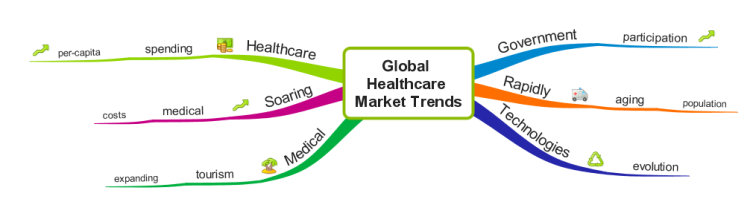
AI search also changes geo-targeting strategy. AI models often provide region-specific answers based on drug approvals, treatment guidelines, and availability.
This means pharma companies must create geo-specific content such as:
- US treatment guidelines content
- Europe treatment guidelines content
- Country-specific drug availability content
- Insurance and reimbursement information
- Region-specific patient support programs
If your content does not include geo-specific information, AI may not include your brand in region-specific answers.
AI search pharma brand visibility is not just about global content. It is about localized medical information.
Pharma Commercial Strategy Must Change
This shift affects more than digital marketing. It affects commercial strategy.
Think about how pharma companies traditionally built brand visibility:
- Sales reps
- Conferences
- Journal ads
- Doctor meetings
- Websites
- Google search
- Patient awareness campaigns
Now add a new channel:
- AI search platforms
In the future, pharma brand strategy discussions will include questions like:
- Is our drug included in AI-generated treatment summaries
- Are AI systems using our clinical trial data
- Is our disease education content being used by AI
- Are we visible in AI answers for treatment comparisons
- Are doctors seeing our brand when they use AI research tools
AI search is becoming a new commercial channel.
The Companies That Will Win in AI Search Visibility
Based on current trends, pharma companies that will dominate AI search visibility will be those that:
- Publish high-quality educational content
- Publish clinical data summaries in simple language
- Create structured content libraries
- Regularly update medical content
- Publish expert-authored content
- Create content for specific medical questions
- Build strong domain authority in disease areas
- Create content for both patients and healthcare professionals
- Use AI tools to analyze search questions
- Optimize content for AI answer extraction, not just SEO ranking
This is a content scale and content quality strategy, not just a keyword strategy.
A Strategic Question for Pharma Marketers
If AI search reduces traditional search traffic by 25 percent, what happens to your current digital strategy? Are you still measuring success using website traffic and keyword rankings, or are you preparing for AI-generated visibility?
Because in AI search, the winner is not the company with the best website.
The winner is the company whose information becomes the default answer.
That is what AI search pharma brand visibility really means. It is not about ranking. It is about becoming the source that AI trusts when it generates medical and treatment information.
And in an industry where information shapes prescription decisions, being the default answer is the most powerful marketing position a pharmaceutical brand can have.
References
Gartner Report: Search Engine Market Share Forecast 2026
https://www.gartner.com/en/marketing/research/search-engine-evolution-ai
McKinsey: The Future of Search and Generative AI
https://www.mckinsey.com/capabilities/mckinsey-digital/our-insights/the-future-of-search-generative-ai
Google Search Generative Experience (SGE) Documentation
https://developers.google.com/search/docs/sge
Accenture Life Sciences: Digital Transformation in Pharma Marketing
https://www.accenture.com/us-en/insights/life-sciences/digital-marketing-transformation
Deloitte Insights: AI and the Future of Search in Healthcare
https://www2.deloitte.com/us/en/insights/industry/life-sciences/ai-search-healthcare.html
