 US Pharma Marketing
Reimagining the Pharma-Agency Relationship
There is ample discussion about how AI may be the death of traditional advertising. But few people want to discuss what is growing beneath the wreckage.
Currently, there is increasing evidence that our healthcare clients want to be partners in content creation, now that they have the same tools we do. And our customers are no longer interested in information gathering. (Why bother if the AI assistant or autonomous agent does all the work for them?) The human attention economy our advertising models were built for is disappearing. Long live the robots!
At first glance, this appears to be a dystopian future for agencies. If AI can gather information, generate content, and guide healthcare-related decisions, what role remains for agency partners?
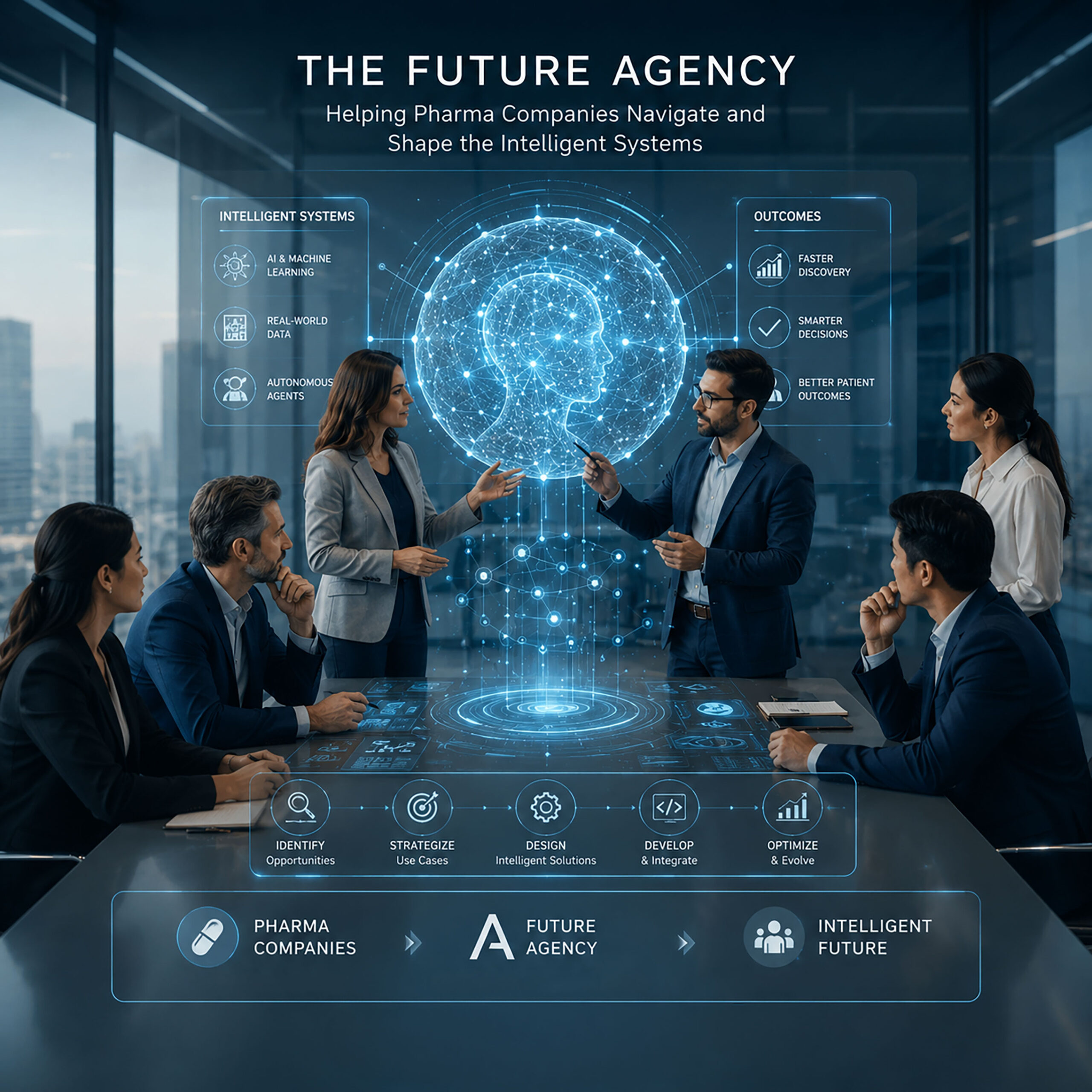
But the reality is this doomsday perspective is short-sighted. There is a different shift taking place and it is redefining the pharma-agency relationship. Pharma companies are rethinking how they create, govern, and deploy information across an entirely new AI-mediated ecosystem. Agencies are evolving from executional partners into strategic orchestrators and architects, helping clients build the infrastructure, governance frameworks, and AI-native experiences required to thrive in this environment. The future agency will not simply create campaigns. It will help pharma companies navigate and shape the intelligent systems increasingly influencing healthcare decisions. Greater collaboration will be needed for these AI-enabled marketing plans to succeed.
“At first glance, this appears to be a dystopian future for agencies. If AI can gather information, generate content, and guide healthcare-related decisions, what role remains for agency partners?”
Let’s evaluate the new roles and opportunities AI is clearing the way for between our pharma clients and agencies.
Data & Compliance
The word “data” has several connotations. There’s the negative association with energy usage, compute issues, and the current land war among the tech giants. But let’s set that aside for now. Data for our purposes is the single source of the truth that governs the actions of our customers (patients and HCPs). And it is the foundation that AI systems will use to inform those actions.
Agencies need to develop diverse data stacks that work seamlessly (and compliantly) with our client’s data in order to produce the personalized solutions that our customers are expecting. And pharma companies should get comfortable with the new models for governing and sharing this data. This type of collaboration can mean faster product launches and dynamic, scalable campaigns.
Now let’s talk about compliance. The data that is being captured requires validation before it’s turned into content and solutions. And this is a new step in the approval process that looks different based on which country you’re in. Collaboration between agencies and pharma clients will be necessary to prevent delays and bottlenecks.
What’s exciting about where we are right now is that we can decide together what this collaboration looks like in order to be successful. The “concept review” step will expand to a “data and compliance review” process.
“The future agency will not simply create campaigns. It will help pharma companies navigate and shape the intelligent systems increasingly influencing healthcare decisions. ”
New Capabilities
Once the data has been organized and vetted, the real fun begins in this new era for advertising. Agencies must develop different approaches to helping their clients raise awareness and increase adoption of new treatments. Spoiler alert: the tried-and-true tactics of emails, websites, and banner ads that agency work comprises will become consolidated assets under larger AIenabled transformation programs that clients will rely on agencies to deliver. Examples include providing endto-end customer service solutions that capture the lead, engage with the customer (or autonomous agent), and complete the transaction; or an agent assessment and builder tool that identifies and builds the ideal AI ecosystem for a healthcare brand across the entire customer journey. That “data and compliance review” process will become critical when approving these transformation programs. Agencies will be expected to provide data flow diagram slides on how these new systems are generating and validating the outputs, and clients will need the right type of technical reviewers to be able to accurately review and approve these programs.

“This new era of AI is just another evolutionary step. The agency-pharma relationship will be strengthened through consistency, collaboration, and trust as we test new approaches. It’s important not to be distracted by the disruption but to evaluate its potential and adapt. ”
Creativity
Genuine creativity cannot be manufactured or coded; it is an organic expression of the human spirit. So the agency role as creative partner stays true to its origin. And those agencies who can wield the strength of AI will become even more valuable to clients because their outputs have infinite possibilities.
There is a current shift in consumer behavior on adopting AI-generated content. It’s no longer discouraged, but the expectation for authenticity will increase in the eyes of patients and HCPs. And agencies will be required to establish ways to show authenticity and give their clients guidance on what should be generated to prevent consumer backlash or lose an audience’s trust.
Engagement & Measurement
Once these new AI-enabled systems are built, the old model of engagement will not work. We are living in a zeroclick world.
So expectations will adjust on the client’s part about what a successful launch looks like. And agencies will adjust their measurement approach when click-through rates are no longer determinants of engagement. Building awareness may mean more human-validated approaches. And the in-office experience may become the most important channel to measure.
The agency’s role as strategic partner expands in scope, because clients will increasingly rely on their recommendations on what AI-enabled systems to build and how to measure effectiveness of campaigns. Agencies have always been adept at identifying trends and cultural shifts. Now there will be demand on identifying how to market and influence a different set of customers—the AI agents who have no eyeballs to attract.
For the last 60 years, agencies have helped pharmaceutical brands navigate every major evolution in the promotional landscape—from television, radio, and newspapers to websites, search engines, and social platforms. This new era of AI is just another evolutionary step. The agency-pharma relationship will be strengthened through consistency, collaboration, and trust as we test new approaches. It’s important not to be distracted by the disruption but to evaluate its potential and adapt.
People will always want content to make decisions. That content will live in different containers. The influencers may change but the outcome stays the same—to service our healthcare customers so they can make informed decisions.