 US Pharma Marketing
Transforming Patient Support in Oncology Through Interconnected Engagement
Novel therapeutic modalities are reshaping how cancer is treated, bringing both promise and complexity. Each therapy type has unique demands and the one-size-fits all patient support program no longer works. A patient receiving radioligand therapy (RLT) might undergo two weeks of daily treatment, while someone beginning cell and gene therapy (CGT) faces an intense preparation phase followed by extended monitoring. Patients and caregivers must absorb complex information about how treatments work, potential side effects, and administration protocols, often within weeks of an initial diagnosis.1-4 Life sciences companies can play an important role here, complementing healthcare systems with support programs designed to meet patients where they are.
Five Aspects of Comprehensive Patient Support
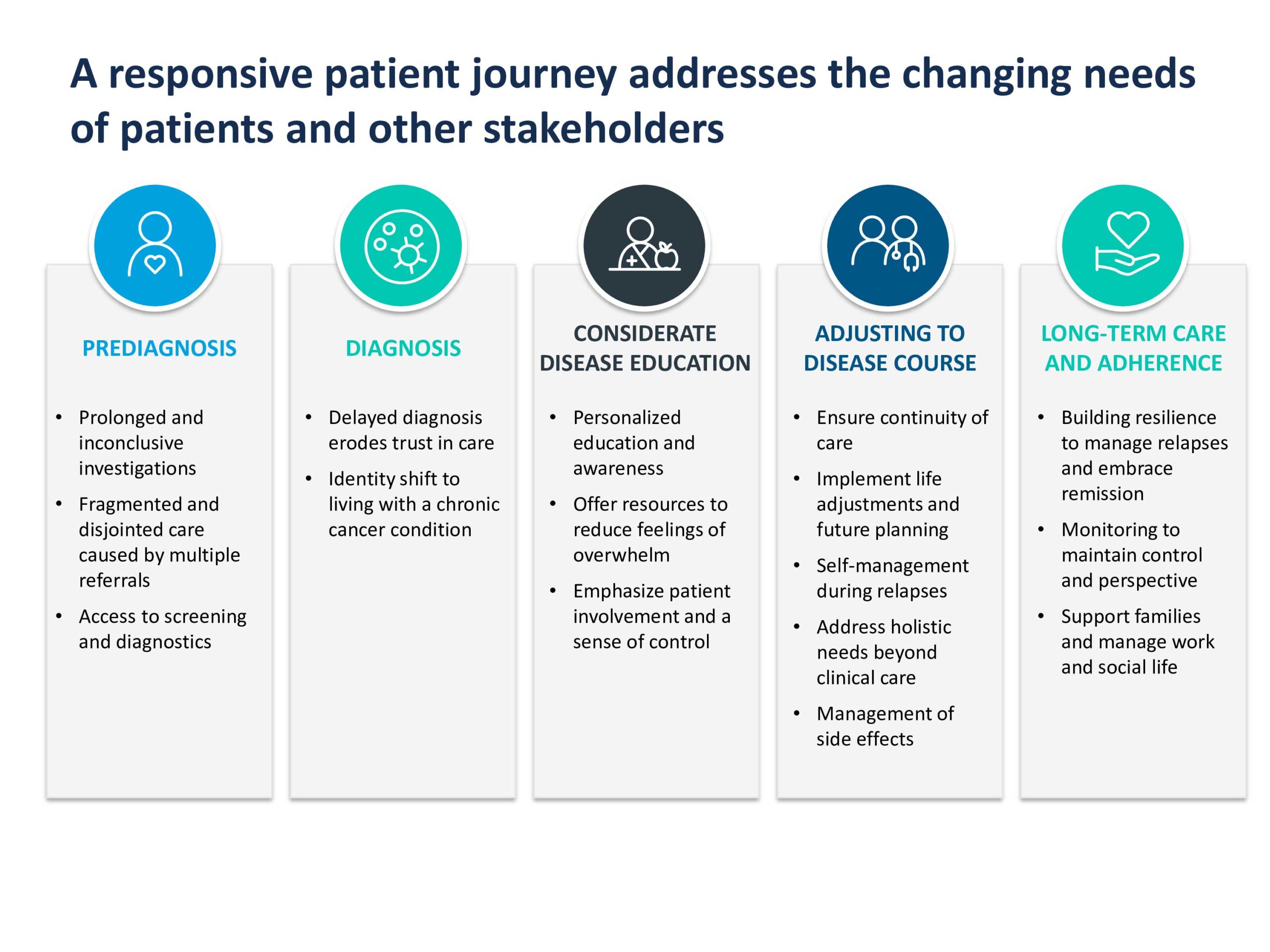
Effective oncology support programs should address five interconnected dimensions that span the full patient journey.
• Patient education and engagement should set the foundation. Complex therapies need to be explained in plain language materials that build patient confidence. Pretreatment orientation helps set realistic expectations and the goal is ensuring patients understand their treatment without being overwhelmed, particularly given compressed timelines between diagnosis and treatment initiation.1
• Emotional and behavioral support can provide the psychological scaffolding patients often need. This dimension draws on behavioral science frameworks like COM-B (Capability, Opportunity, Motivation for Behavior change), which examines barriers patients face and techniques that can enhance their motivation. Unlike traditional education that simply provides information, these approaches target specific barriers to drive lasting change.2
• Treatment coordination and logistical support streamline the patient journey by establishing a single point of contact who manages scheduling, transportation, and site navigation across care locations. This can be especially critical for patients undergoing RLT, which requires travel to limited treatment sites, or for anyone navigating combination regimens.1
• Caregiver engagement often determines treatment success. Training programs can equip caregivers to administer treatment, recognize side effects, and manage home health care. Caregivers of CGT patients may need to monitor patients post-treatment while those supporting RLT patients must understand radiation safety protocols at home.1
• Access and affordability solutions address financial barriers through benefits verification, copay assistance, and manufacturer support programs. This proves particularly vital for newer therapies facing reimbursement delays where early financial navigation can prevent treatment abandonment.1
These frameworks deliver measurable results. An immunotherapy access program demonstrated 95% treatment persistence, 93% adherence rates, and reduced time from prescription to first dose to just three to four days. 90% of referred patients benefited, reporting greater clarity, confidence, and continuity in their journey.5
Support that Matches the Science
As oncology treatments evolve toward greater personalization, comprehensive patient support becomes essential for making a real impact. Through coordinated, compassionate, and scientifically grounded support, life sciences leaders can shape a brighter future for patients, caregivers, and the professionals who guide them.