 US Pharma Marketing
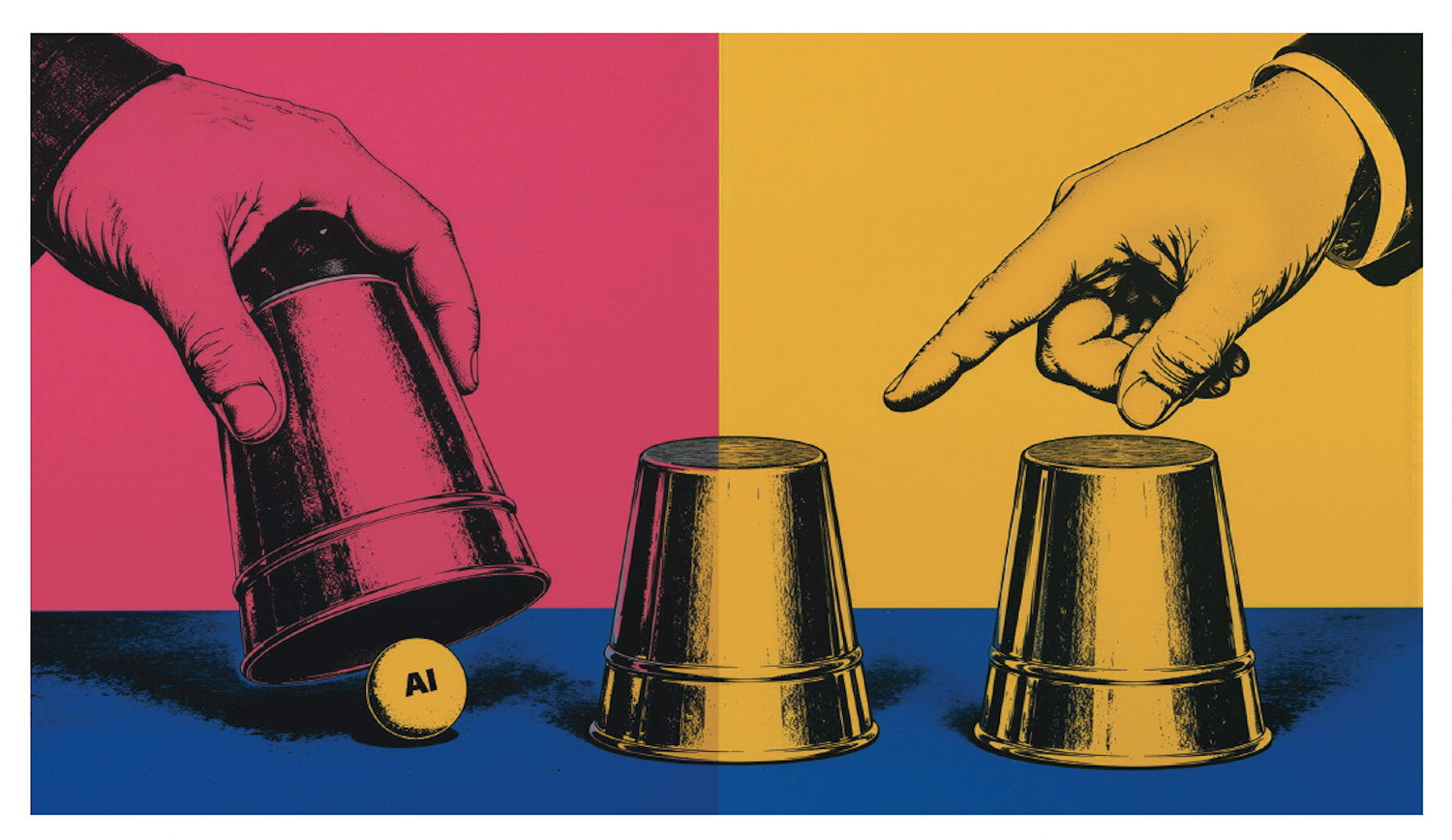
How deep does your advantage really go?
With AI, the promise of generating standout creative may feel limitless—but it’s also more unforgiving.
Generative AI is rapidly turning execution into a commodity. Headlines, key visuals, layouts, email variations, social cutdowns, and first-draft copy appear in minutes, often with a level of polish that would have required a full team not long ago.
When creative output becomes abundant, discovery becomes scarce. In categories like biopharma and MedTech—where attention is limited, complexity is high, and trust is hard-won—differentiation will come from what a brand says, why it matters, and how consistently that meaning shows up across every touchpoint.
When “Good” Stops Working AI’s most immediate impact is the accessibility of tools for rapid execution. Teams can create more assets, more versions, more tests, and more formats faster and at a potentially lower cost. That’s a genuine advantage in healthcare, where audiences are fragmented across stakeholders, channels, and moments of decision-making.
However, abundance has a consequence. It changes what “quality” means. When everyone can generate work that looks professional, professional no longer stands out. The market gets louder, not clearer. The pressure shifts from making something that looks good to making something that breaks through.
The Edge Is No Longer in Execution—It’s in Judgment
What AI struggles with is the part of creativity that determines whether anything is worth assembling in the first place: deciding what the audience should care about, determining which tension in the category to confront, choosing the trade-off that creates clarity, and finding the angle that feels both true and unexpected. In healthcare, these choices also require an instinct for scientific credibility, clinical nuance, and the ethics of persuasion.
Choosing the right direction becomes more important than generating the assets. Editing becomes more valuable than drafting. Protecting brand integrity, scientific credibility, and ethical standards becomes a differentiator. Designing systems that scale distinctiveness becomes the real craft.
This is especially true in healthcare, where the cost of being imprecise is not just performance. It’s trust.
Abundance of Outputs Versus Scarcity of Ideas
The best ideas are often scarce by design. Good strategy narrows, commits to a point of view, and establishes disciplined guardrails.
AI does the opposite. It expands. It offers a near-infinite set of plausible permutations, many of which feel immediately usable. But without constraint, abundance becomes a trap. Teams mistake volume for progress.
They get busy refining the wrong idea because it arrived quickly, looked right, and felt safe.
Originality rarely arrives as the most likely output. It arrives as a deliberate choice. That’s why the human role becomes more, not less, important; it imposes intention on infinite possibility.
When AI Struggles, Pay Attention
When you’re pushing toward a concept that doesn’t have an obvious precedent, AI often snaps back to what is familiar. It will generate predictable metaphors, make generic claims, or default to the most common visuals.
The model is doing exactly what it was built to do: using pattern recognition across content that already exists.
And that’s the point.
If you’re asking for something that doesn’t have a strong reference, the system may not render it cleanly. That struggle can be a tell that you’re operating in original territory. By contrast, if the first output is instantly polished, it may not be an original thought.
The iterative process of brainstorming and shaping the idea is where the magic happens. It’s where teams push beyond the expected, challenge the first obvious answer, and find the outside-the-box idea that can make a real difference to the audience.
AI is not the end of advertising. It is the end of advertising that relies on execution alone.
AI Is Only as Valuable as the Person Using It
The most important truth about generative tools is also the simplest: They amplify the operator.
In the hands of a team with taste, strong clinical grounding, and a clear creative standard, AI accelerates exploration and elevates throughput.
In the hands of a team without a point of view, it generates a lot of “good enough,” and good enough is the new invisible. This is why prompting is less like asking for content and more like writing a brief. The prompt defines the problem, the audience, the stakes, the tone, the boundaries, and the evaluation criteria. Most systems are optimized for completion, not conviction.
The human job is to decide what “great” looks like.
How AI Amplifies the Strengths of Client Teams and Agencies
As AI reshapes workflows, it also clarifies roles. In the best partnerships, it strengthens collaboration between client teams and agency teams.
“It’s tempting to frame AI as a threat to creativity. A more accurate framing is that it will expose what is and what isn’t truly creative.”
Internal brand and commercial teams tend to operate from an inside-out perspective. They hold deep scientific intimacy, institutional memory, cross-functional alignment, and a practical understanding of feasibility, governance, and long-term brand stewardship.
Agencies tend to operate from an outsidein perspective. They bring distance, pattern recognition across categories, an ear for culture and attention, and an obsession with differentiation. They are built to challenge assumptions, sharpen the point of view, and create contrast that can be felt quickly.
When teams are aligned, they can produce something powerful: a clearer strategy, a more ownable creative system, and a faster path from idea to impact.
The Future Is Faster—and More Human
The future belongs to agencies with curious people who pair speed with judgment, scale with strategy, and technology with ideas worth believing in.
It’s tempting to frame AI as a threat to creativity. A more accurate framing is that it will expose what is and what isn’t truly creative.
Creativity is not primarily the act of making. It is the act of choosing. It’s knowing what matters, what to emphasize, what to simplify, what to protect, and what to push.
AI will make healthcare marketing more efficient, more adaptive, and more scalable. That’s a good thing.
In this era of infinite content, the competitive advantage won’t be quantity.
It will be quality.