 US Pharma Marketing
THERAPEUTIC TALK
Eli Lilly Expands Mental Health Pipeline with $2.8 Billion AtaiBeckley Acquisition

Eli Lilly is expanding its mental health pipeline with the acquisition
of AtaiBeckley and its investigational psychedelic therapies.
Eli Lilly has agreed to acquire AtaiBeckley in a deal valued at $2.8 billion upfront, strengthening its presence in the emerging field of psychedelic-based treatments for mental health disorders. The acquisition gives Lilly access to AtaiBeckley’s lead investigational therapy, BPL-003, an intranasal formulation of the psychedelic compound 5-MeO-DMT being developed for treatment-resistant depression (TRD). In a Phase 2b clinical trial, BPL-003 demonstrated statistically significant improvements in patients beginning two days after treatment, with benefits maintained through Day 57.
The acquisition also includes additional milestone payments tied to the advancement of BPL-003 and AtaiBeckley’s second investigational therapy, VLS-01, potentially increasing the deal’s total value by up to $1 billion. If approved, BPL-003 could compete with currently available TRD therapies, including Johnson & Johnson’s Spravato, while offering a shorter post-treatment monitoring period. The agreement reflects Lilly’s continued investment in expanding its neuroscience portfolio and advancing new treatment options for patients with difficultto-treat mental health conditions.
Early Lung Cancer Blood Test Becomes Available to Healthcare Providers Across the US

Cizzle Biotechnology’s CIZ1B blood test is now available to healthcare providers across the U.S., offering a new tool to support earlier lung cancer detection through a simple blood sample.
Cizzle Biotechnology has announced the first commercial deployment of its proprietary CIZ1B blood test for the early detection of lung cancer following Clinical Laboratory Improvement Amendments (CLIA) accreditation at OmniHealth Diagnostics in Dallas, Texas. The approval enables licensed healthcare providers across the US to order the test, providing a regulated pathway for the company’s technology in the world’s largest healthcare market. Designed to complement existing low-dose CT screening, the test detects a protein biomarker associated with early-stage lung cancer using a simple blood sample, offering a scalable approach to support earlier diagnosis.
The launch comes as lung cancer remains the leading cause of cancer-related deaths in the US, despite more than 14 million Americans being eligible for annual screening. Because most cases are diagnosed at advanced stages, survival rates remain low, while detection at Stage I can increase five- year survival rates to as high as 90%. The commercial milestone follows decades of research on the CIZ1B biomarker and strengthens Cizzle Biotechnology’s efforts to expand access to its early detection technology in the US, with future plans for broader international deployment.
DISCOVERY & INNOVATIONS
Gene-Silencing Therapy Shows Promise in Treating Rare Muscular Dystrophy
Epicrispr Biotechnologies has reported early clinical results from its investigational gene-silencing therapy, EPI-321, showing increased lean muscle mass in patients with facioscapulohumeral muscular dystrophy (FSHD). In an ongoing Phase 1/2 study, three patients receiving a lower dose of the single IV infusion experienced increases in lean muscle six months after treatment, marking a potential clinical milestone for a disease that currently has no approved therapies. The therapy uses epigenetic editing technology to target and silence the DUX4 gene, which drives the progression of FSHD. The early findings highlight the potential of epigenetic medicine to address the underlying genetic causes of rare diseases. While additional follow-up and clinical evaluation are needed, the results represent a significant step forward in developing new treatment approaches for FSHD, a condition that causes progressive muscle wasting and affects hundreds of thousands of people worldwide. Epicrispr’s work adds to a growing field of innovative genebased therapies aimed at transforming care for patients with difficult-to-treat genetic disorders.
New Ebola Vaccine Candidate Advances to First Human Clinical Trial
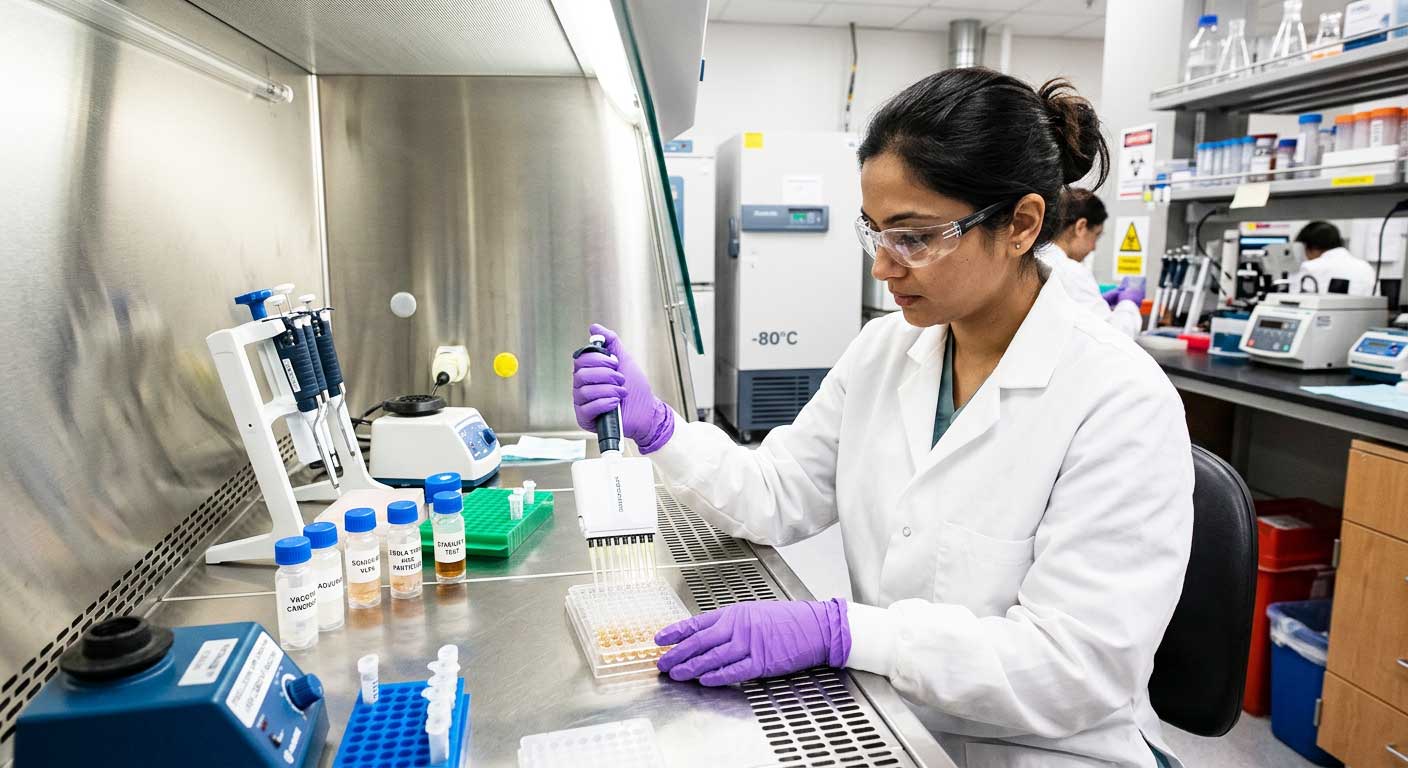
A new Ebola vaccine candidate developed by the University of Oxford and Serum Institute of India has entered its first human clinical trial, advancing efforts to improve outbreak preparedness.
A new vaccine candidate targeting the Bundibugyo Ebola virus is set to enter a Phase 1 clinical trial in the UK, marking a significant step forward in efforts to prevent future outbreaks. Developed by the University of Oxford’s Oxford Vaccine Group in collaboration with the Serum Institute of India, the ChAdOx1 BDBV vaccine will be evaluated for safety and immune response in 50 healthy adults. The vaccine uses the same platform technology as the AstraZeneca COVID-19 vaccine and was developed through a partnership supported by the Coalition for Epidemic Preparedness Innovations (CEPI).
The advancement comes as global health organizations work to expand vaccine options for emerging infectious diseases. The Serum Institute has prepared thousands of investigational doses for clinical evaluation, with additional doses stored for potential future use. If successful, the vaccine could progress to later-stage trials and support efforts to improve preparedness, accessibility, and response capabilities during future Ebola outbreaks.
FDA UPDATE
Novartis’ Fabhalta Gains FDA Approval to Slow Kidney Function Decline in IgA Nephropathy
The FDA has granted traditional approval to Novartis’ Fabhalta (iptacopan) to slow kidney function decline in adults with primary IgA nephropathy (IgAN) at risk of progression. The approval, supported by data from the Phase III APPLAUSE-IgAN trial, follows Fabhalta’s earlier accelerated approval for reducing proteinuria in the same patient population. In addition, Mission Therapeutics has divested its kidney disease asset MTX652 to Dimerix in a deal valued at up to $292 million, allowing Dimerix to expand its renal disease pipeline while enabling Mission to advance its lead Parkinson’s disease program. The developments highlight continued innovation and investment in new treatment approaches for kidney diseases.
FDA Expands Approval of Padcev and Keytruda Combination for Muscle-Invasive Bladder Cancer
The FDA has expanded approval of a perioperative treatment regimen combining Pfizer and Astellas’ Padcev (enfortumab vedotin-ejfv) with Merck & Co.’s Keytruda (pembrolizumab) for adults with muscle-invasive bladder cancer (MIBC), regardless of cisplatin eligibility. Supported by Phase III EV-304/KEYNOTE-B15 trial data, the approval marks the first platinum-free regimen approved for this patient population and showed improved outcomes compared with standard chemotherapy and surgery. The Padcev-Keytruda combination reduced the risk of tumor recurrence, progression, or death, offering a potential new treatment option for patients with MIBC and expanding the role of immunotherapy and targeted therapies in bladder cancer care.
FDA Proposes Rule to Modernize Drug Manufacturing Registration and Strengthen Supply Chain Oversight
The FDA has issued a proposed rule that would update drug manufacturing registration requirements to better support innovative distributed manufacturing models and improve visibility across pharmaceutical supply chains. The proposal would create a streamlined registration pathway for companies using a “hub-and-spoke” manufacturing model, allowing multiple equivalent manufacturing units to register as a single establishment while maintaining FDA oversight. The rule would also clarify registration requirements for certain foreign facilities involved in manufacturing drugs and active pharmaceutical ingredients that enter the US supply chain. The proposed changes aim to reduce administrative burdens, improve supply chain transparency, and ensure regulatory frameworks keep pace with evolving pharmaceutical manufacturing practices.