 US Pharma Marketing
 PM360 interviews Sage Khanuja, co-founder and president of The RxAssistant. What began as an AI-powered concierge designed to help patients navigate access and affordability has grown into a comprehensive engagement platform serving patients, healthcare providers, and pharmaceutical brands.
Khanuja discusses the company’s growth, the accelerating adoption of AI in healthcare, and the opportunities ahead.
PM360: The RxAssistant has grown significantly since its early days. What’s changed the most about the company over the past year? Sage Khanuja: The scope of our offering. When we initially launched the company, we were interested in tapping into our respective strengths—our DNA—while also leveraging past experience in the pharma industry and AI development. We believed that combination would help unlock insights and practices and then allow us to build a concierge capable of slip-streaming the financial friction patients almost always face.
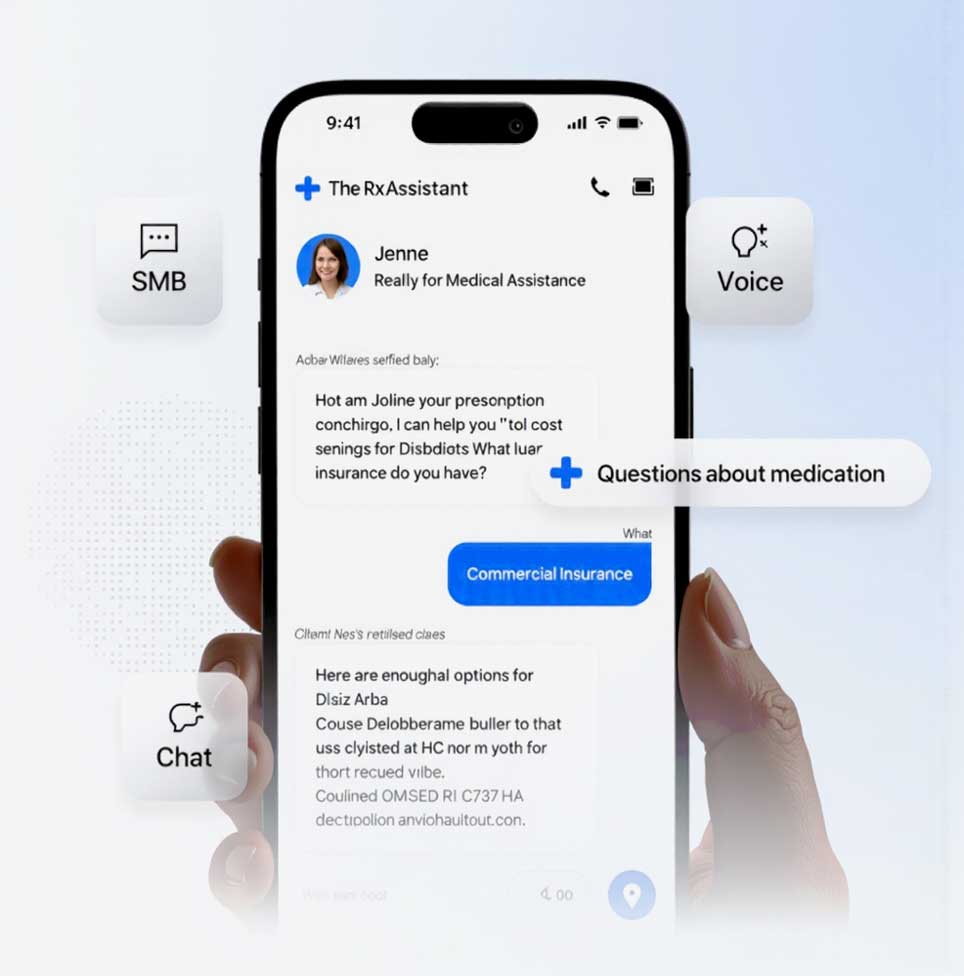
We’ve since expanded the modalities of our platform to include voice, chat, and SMS; expanded our reach by adding HCPs to the patients we already serve, and expanded the jobs performed by the concierge to better drive prescription drug access all the way through to adherence.
Today, The RxAssistant has evolved into a true engagement layer for pharma brands. We support patients and healthcare providers by helping with everything from education and provider search to affordability, enrollment, adherence, and safety reporting. We’ve also transitioned from early pilots to commercial deployments with leading pharmaceutical manufacturers, demonstrating that enterprise AI can operate within the strict regulatory, privacy, and operational standards the industry requires.
You mention in your application that the company has found product-market fit. What were the signals that told you you’d built something the market truly needed?
Product-market fit doesn’t happen when someone likes your demo. Practically, it happens when an idea becomes an approved pilot; survives medical, legal, and regulatory review; launches successfully, and ultimately expands. We were fortunate to move through those stages quickly. What we learned along the way was that our strongest signal wasn’t a specific KPI sitting on a dashboard. Instead, it was provided by pharmaceutical companies—including many we had never previously spoken to—that began reaching out because they had “heard good things.” That’s when we realized we weren’t simply selling AI—we were solving problems the market had already recognized and prioritized.
What’s the most surprising thing you’ve learned from customers since deploying The RxAssistant?
The speed at which AI is being adopted across enterprises. Our team has been at the epicenter of multiple paradigm and technology shifts in pharma (e.g., mobile, social, affordability). With AI, however, customer interest went from zero to 60 in a fraction of the time of those earlier cycles and shifts. And while the pace of AI’s diffusion and adoption has been somewhat surprising, at least one thing remains constant: commercial pharmaceutical teams still care less about the underlying technology, in this case AI, than they do about measurable business outcomes—therapy starts, adherence, access, and operational efficiency.
“Patients and providers won’t adopt AI ‘because it’s AI.’ They will adopt networkcentric solutions that make their lives easier and better.”
Beyond engagement metrics, how do you measure whether The RxAssistant is actually improving the patient experience?
Our mission is to use AI to humanize healthcare by removing friction for patients and healthcare providers. That means we don’t define success by clicks or conversations—we define it by solving real-world problems. And because our AI-powered concierge is on the ground actively solving those problems, we are uniquely positioned to shape, and reshape, the vectors leading to an actual prescription. Our pharma partners most often measure this in the form of completed outcomes: enrollments, appointments scheduled, financial assistance secured, providers located, and barriers removed.
As demand has grown, what have been the biggest challenges in scaling the business while maintaining the platform’s quality?
The biggest challenge scaling our company has been growing our commercial team to meet market demand. Because interest and activity has ramped-up so quickly, we’ve had to dedicate the time, energy and resources to bring in people who are both highlyqualified and comfortable operating at the speed of our business.
AI capabilities seem to evolve almost monthly. How do you decide which new technologies are worth incorporating into The RxAssistant and which aren’t?
We continue to focus on buildingout a platform that makes it easy for pharmaceutical companies and brands to deliver high-fidelity, continuous AI-driven user experiences for patients and HCPs. The flexible design of our platform makes it straightforward for us to evaluate AI, or other tech-enabled solutions, aimed at removing friction for patients and HCPs as they navigate the healthcare system. Our guiding philosophy is that reliability, security, and accuracy matter more than having the newest model. Pharma companies tend to reward consistency over novelty.
When you first meet with pharmaceutical companies, what concerns or misconceptions about AI do you find yourself addressing most often?
Many companies initially assume that deploying externally-developed AI solutions won’t be approved by their med-legal teams because compliance will be too high a hurdle. In reality, well-designed AI can safely combine conversational flexibility with robust guardrails. We demonstrate how AI can operate within existing medical, legal, regulatory, privacy, and pharmacovigilance processes rather than around or outside of them.
You’ve assembled a team with experience across some of healthcare’s most recognizable technology companies. What have those perspectives added to the product?
An interesting and relevant learning about the intersection of our experience at Epocrates, One Medical, SERMO and GoodRx: Healthcare is a maze!
Healthcare innovation has focused on building smarter point solutions—from smarter EHR workflows to smarter authorization tools and copay programs. However, for people using the health system, healthcare has not become meaningfully simpler. In actuality, there is no ‘front door’ and there never has been. We published an article summarizing our leadership team’s thesis and perspective, AI Made Healthcare Smarter–The Next Step is Making It Simpler, which can be found on our website.
If you could solve one remaining point of friction in the healthcare journey, what would it be?
We’ll continue building a platform that enables the democratization of access and affordability solutions for patients and HCPs. If we can deploy an easy-touse toolkit that removes friction and makes healthcare more understandable and approachable, then we’ll have played our part in delivering outcomes while making healthcare less expensive for the masses.
Many healthcare technologies promise to simplify the patient journey, yet adoption often remains a challenge. What do you think separates solutions that patients and providers actually use from those that don’t?
Two immediate thoughts: One, the best solutions meet people where they are already at—whether that’s a website, SMS, voice, or pharmacy—and require little or no training. Two, technology succeeds when it saves time and completes meaningful work. Patients and providers won’t adopt AI ‘because it’s AI.’ They will adopt network-centric solutions that make their lives easier and better.