

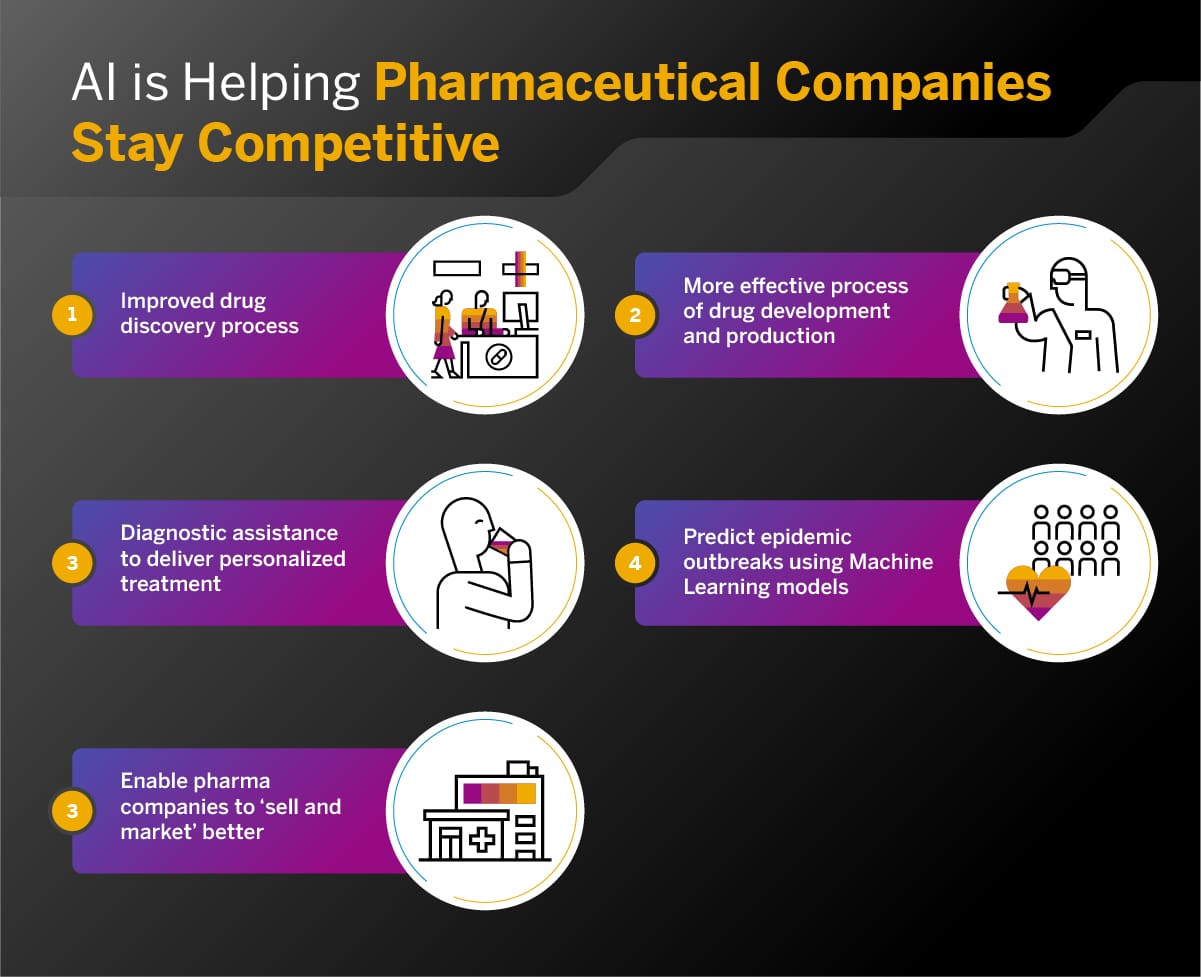
The pharmaceutical industry spent decades building tightly controlled promotional systems where every word in an advertisement passed through medical, legal, and regulatory review. Then generative AI arrived and broke that system in less than two years. Marketing teams can now generate hundreds of promotional messages, patient education materials, and physician emails in minutes. The speed of content creation has increased dramatically, but regulatory review systems were never designed for machine-generated content at scale. That gap between content speed and compliance review is exactly why the FDA released draft guidance addressing AI and machine learning in pharmaceutical advertising.
If you work in pharmaceutical marketing, medical affairs, regulatory affairs, or compliance, this guidance is not just another regulatory document. It signals how regulators are thinking about AI-generated promotion, automated messaging, personalized advertising, and algorithm-driven communication with patients and physicians.
The key issue is simple. If AI generates promotional content, who is responsible for the claims the AI makes?
Why the FDA Is Paying Attention to AI in Drug Promotion

The FDA Office of Prescription Drug Promotion regulates prescription drug advertising in the United States. The agency requires promotional content to be truthful, balanced, and consistent with FDA-approved labeling. Every claim must be supported by evidence. Risk information must be presented clearly. Promotional content cannot be misleading.
Traditional pharmaceutical advertising followed a predictable process. Companies created promotional material, medical teams verified claims, legal teams reviewed language, and regulatory teams ensured compliance with FDA rules. The process was slow, controlled, and documented.
AI changes this process in several ways:
- AI can generate promotional content instantly
- AI can personalize messages for individual patients
- AI chatbots can answer patient questions about drugs
- AI systems can generate social media content automatically
- AI tools can summarize clinical data and generate promotional claims
This creates new regulatory risks. If an AI system generates a promotional claim that is not consistent with the approved label, the company is still responsible for that claim. The FDA does not regulate algorithms. It regulates promotional claims and company behavior.
So the real regulatory question becomes: how do companies control AI-generated promotion?
The Timeline: How We Reached This Point


To understand the FDA’s draft guidance, you need to understand the timeline of AI adoption in pharmaceutical marketing and regulation.
Key developments over the past decade shaped the current regulatory environment:
- 1997: FDA clarifies rules allowing direct-to-consumer pharmaceutical advertising on television
- 2000s: Growth of digital pharmaceutical marketing and online disease awareness campaigns
- 2010s: Social media becomes a major pharmaceutical marketing channel
- Late 2010s: AI begins to be used for marketing analytics and targeting
- 2020–2022: AI used for content generation, chatbots, and automated engagement
- 2023–2025: Generative AI tools begin producing promotional content, medical summaries, and patient communication materials
- FDA begins evaluating how existing promotional regulations apply to AI-generated content
The FDA did not create entirely new advertising laws for AI. Instead, the agency is clarifying that existing advertising regulations apply to AI-generated content the same way they apply to human-created content.
This is a critical point. AI does not change the legal responsibility of pharmaceutical companies.
What the FDA Draft Guidance Focuses On
The FDA draft guidance on AI and pharmaceutical advertising focuses on several key areas where AI creates new promotional risks.
1. AI-Generated Promotional Content
If AI generates text, images, videos, or audio promoting a drug, the company is responsible for ensuring the content is accurate, balanced, and on-label.
This includes:
- AI-written promotional copy
- AI-generated patient education materials
- AI-generated physician emails
- AI-generated social media posts
- AI-generated video scripts
The FDA expects companies to review and approve AI-generated promotional content before it is used publicly.
2. Chatbots and Interactive AI Systems
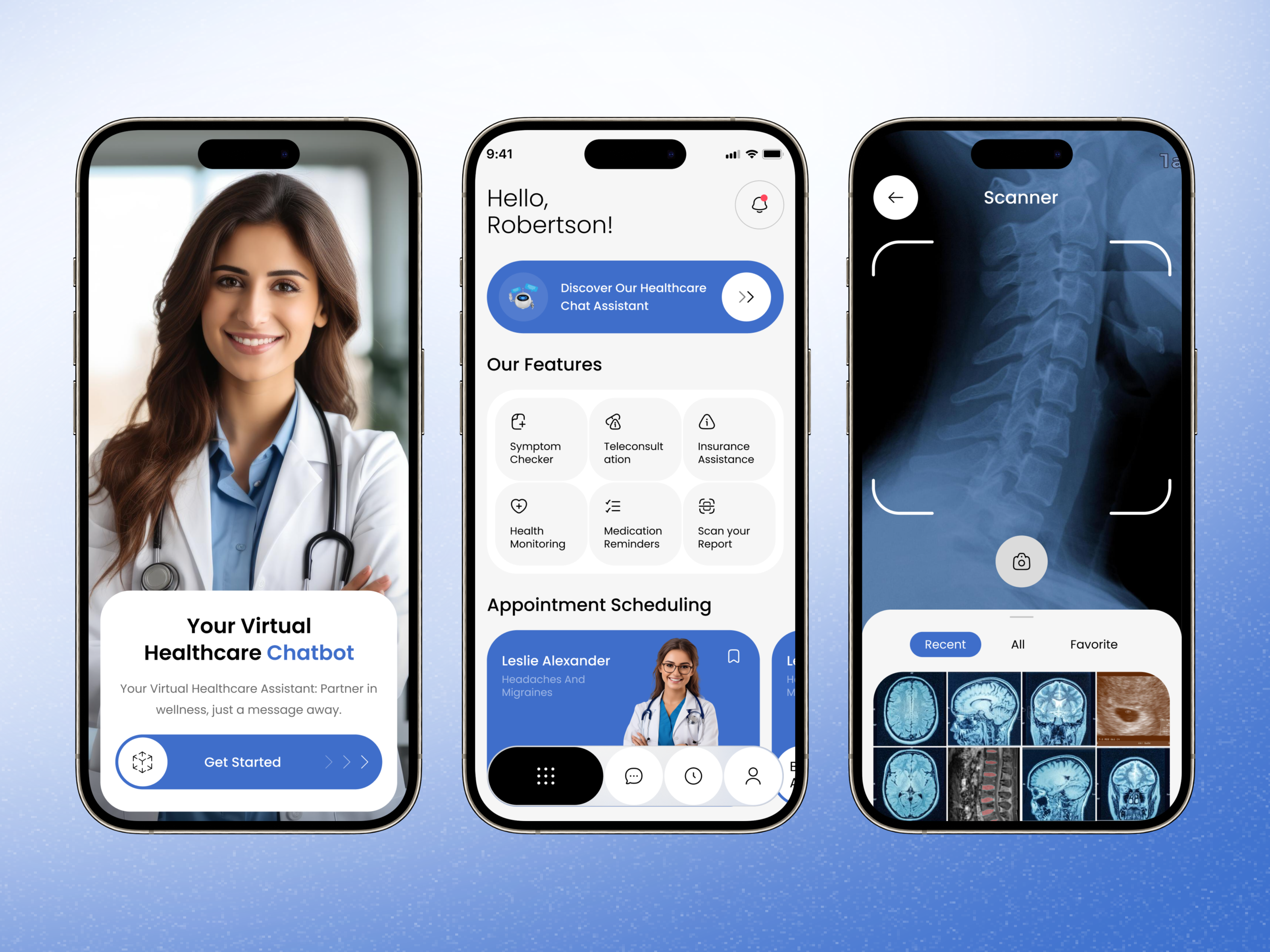
Many pharmaceutical companies now use chatbots on websites and patient support platforms. These chatbots answer patient questions about diseases and treatments.
The regulatory risk is clear. If a chatbot provides off-label information, makes unsupported claims, or fails to provide risk information, the company may be responsible for misleading promotion.
This means companies must monitor chatbot responses and control what the AI is allowed to say.
3. Personalized Advertising and Algorithm-Driven Promotion
AI allows companies to personalize advertising messages based on patient data, behavior, and preferences. Personalized advertising raises regulatory questions about:
- Fair balance between benefits and risks
- Whether risk information is shown in personalized ads
- Whether personalized messages exaggerate benefits
- Whether vulnerable patient populations are targeted
The FDA is paying attention to algorithm-driven promotion because personalization can change how risk and benefit information is presented.
4. Real-Time Content Generation
Traditional promotional review systems approve content before it is published. AI systems can generate content in real time, which creates a review challenge. The FDA expects companies to maintain control over real-time content generation systems.
This may require:
- Pre-approved content libraries
- Guardrails on AI systems
- Human review processes
- Monitoring and auditing AI outputs
The regulatory expectation is clear. Speed does not remove responsibility.
What This Means for Pharma Marketing Teams

If you work in pharmaceutical marketing, this guidance changes how you use AI tools.
You can still use AI for:
- Drafting content
- Summarizing clinical data
- Creating email campaigns
- Generating patient education material
- Creating sales training content
- Market research summaries
- Competitive intelligence
But you must build compliance controls into the AI workflow.
This means companies need:
- AI content review processes
- Prompt templates with compliance instructions
- Guardrails that prevent off-label claims
- Documentation of AI-generated content review
- Monitoring systems for AI chatbots
- Training for marketing teams on AI compliance
This is creating a new role inside pharmaceutical companies: AI compliance governance.
The Compliance Risk Companies Are Worried About
The biggest risk is not that companies will intentionally create misleading promotion. The biggest risk is that AI will generate a claim that no human reviewed.
Imagine this scenario:
- A patient asks a chatbot whether a drug works for a condition not listed on the label
- The AI generates a response based on clinical research or online information
- The response suggests the drug may help that condition
- That statement becomes off-label promotion
Even if the AI generated the statement automatically, regulators may still hold the company responsible.
This is why companies are building controlled AI systems rather than allowing unrestricted AI use.
Real-World Industry Response
Several large pharmaceutical companies have already implemented internal policies for AI use in marketing and medical communications.
Common internal policies include:
- AI can be used for drafting but not for final content without human review
- AI outputs must be reviewed by medical and regulatory teams
- AI cannot generate new claims not already approved
- AI chatbots must use pre-approved content databases
- All AI-generated content must be documented
- AI systems must include audit trails
This shows that the industry is not waiting for final regulations. Companies are building internal governance systems now.
The Strategic Impact: AI Will Not Replace MLR Review, But It Will Change It
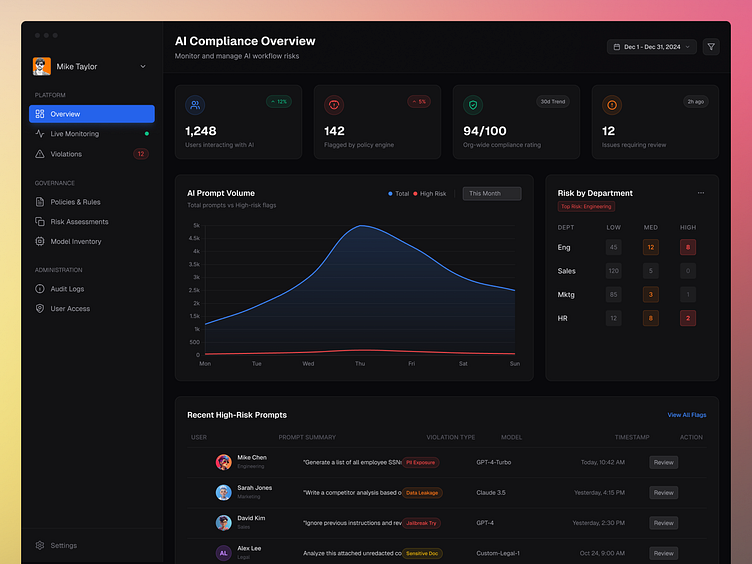
Medical, Legal, and Regulatory review has always been the bottleneck in pharmaceutical marketing content production. AI increases content volume, which puts pressure on review systems.
This will likely lead to:
- Automated compliance checking tools
- AI systems trained on approved label language
- Pre-approved content modules
- Modular content systems
- Automated fair balance checks
- AI monitoring of promotional content
Instead of reviewing entire documents, MLR teams may review content modules and AI systems that generate content from those modules.
This shifts compliance from document review to system review.
The Bigger Question: Is Personalized AI Promotion Compatible With FDA Rules?
Personalized AI marketing raises a deeper regulatory question. FDA advertising rules require fair balance between benefits and risks. In personalized advertising, different patients may see different messages.
This raises important questions:
- Does each personalized message include full risk information?
- Can AI adjust benefit messaging without adjusting risk messaging?
- Can AI target patients based on emotional triggers?
- Can AI identify vulnerable patient groups and target them with promotional content?
Regulators are still evaluating these questions. This is why the draft guidance focuses heavily on company responsibility and control over AI systems.
What Smart Pharma Companies Are Doing Right Now
Companies that are moving quickly but carefully are focusing on several strategies:
- Building internal AI governance teams
- Creating approved prompt libraries
- Using AI only with approved data sources
- Creating AI content templates
- Monitoring AI chatbot conversations
- Training marketing teams on AI compliance
- Creating audit trails for AI-generated content
- Running pilot programs instead of full-scale AI promotion
These companies treat AI as a regulated tool, not just a productivity tool.
The Future of AI in Pharmaceutical Advertising
AI will continue to be used in pharmaceutical marketing because the efficiency gains are too large to ignore. Companies can generate more content, personalize communication, analyze data faster, and respond to market changes more quickly.
But pharmaceutical marketing operates in one of the most regulated industries in the world. That means AI adoption will be slower and more controlled than in other industries.
The companies that succeed will not be the companies that use the most AI. They will be the companies that use AI in a compliant, controlled, and strategic way.
The FDA draft guidance is not trying to stop AI in pharmaceutical marketing. It is trying to ensure that AI follows the same rules that apply to every pharmaceutical advertisement: truthful information, balanced risk communication, and evidence-based claims.
The technology is new. The regulatory principles are not.
If you work in pharmaceutical marketing, the question is not whether you will use AI. The question is whether you will build systems that allow you to use AI without creating regulatory risk.
That is now one of the most important strategic decisions in pharmaceutical commercialization.
References
FDA Draft Guidance on Artificial Intelligence and Machine Learning in Drug Promotion
https://www.fda.gov
FDA Office of Prescription Drug Promotion Guidelines
https://www.fda.gov/drugs/prescription-drug-advertising
Deloitte Report on Generative AI in Life Sciences Marketing
https://www2.deloitte.com
McKinsey Report on AI in Pharmaceutical Commercial Operations
https://www.mckinsey.com
IQVIA Report on AI in Pharmaceutical Marketing
https://www.iqvia.com
STAT News – AI and Pharmaceutical Advertising Regulation Coverage
https://www.statnews.com
