
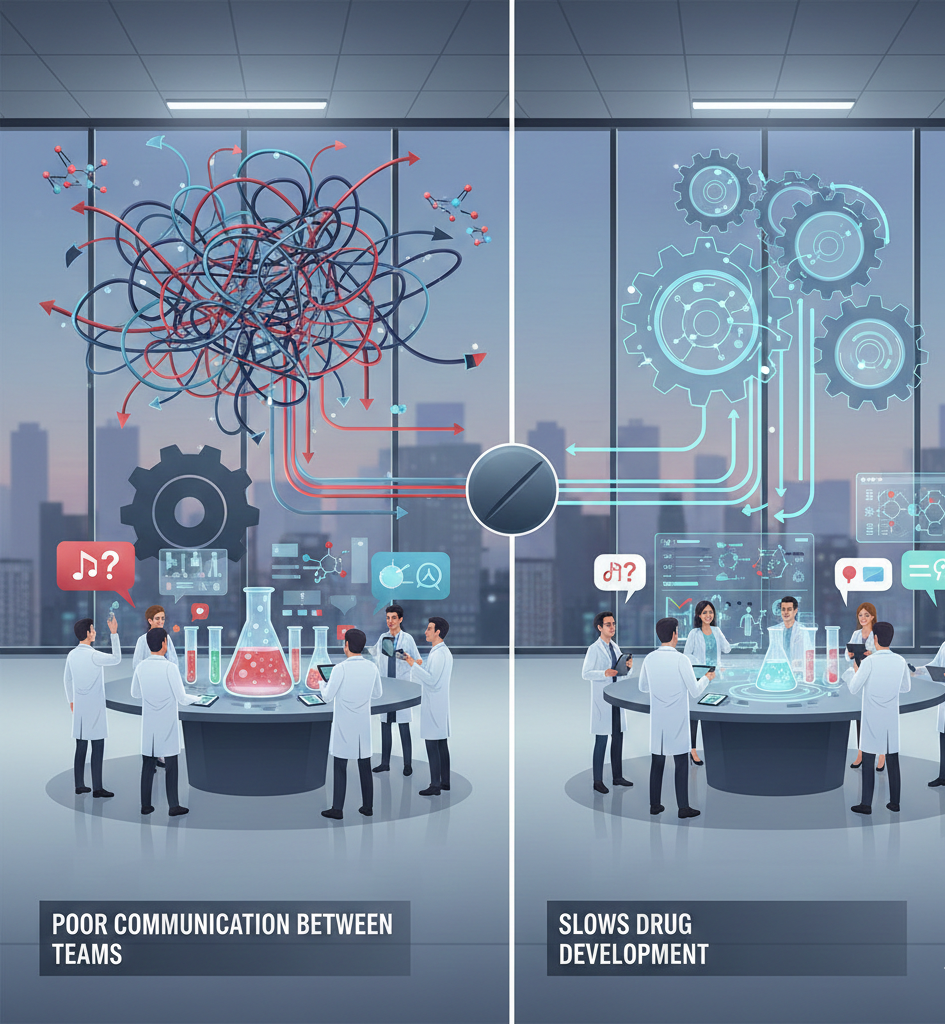

Pharma marketing teams are not struggling with AI adoption. They are struggling with prompt quality. That is the real bottleneck. Most teams already use generative AI tools for email drafts, HCP content, patient education material, and market research summaries. Yet the output often sounds generic, non-compliant, or medically shallow. The problem is not the model. The problem is the instructions you give it.
Prompt engineering has quietly become one of the most valuable commercial skills in pharma marketing. Teams that master it produce faster content, more compliant messaging, better market insights, and stronger campaign performance. Teams that ignore it waste hours editing unusable AI output and risk compliance violations.
You are no longer competing only on brand strategy or creative quality. You are competing on how well your team communicates with AI systems.
Why Prompt Engineering Matters Specifically in Pharma Marketing
In most industries, poor prompts produce mediocre content. In pharma, poor prompts can produce non-compliant content. That difference changes everything.
Pharma marketing operates under strict regulatory frameworks. Every claim must match approved label information. Every comparison must be supported by evidence. Every patient communication must avoid misleading language. When teams use AI casually, they risk generating claims that cannot pass Medical Legal Regulatory review.
This is why prompt engineering in pharma marketing is not just a productivity skill. It is a compliance skill and a commercial skill at the same time.
Consider the typical pharma content workflow:
- Brand team creates messaging
- Medical team validates claims
- MLR reviews content
- Agencies create assets
- Sales teams use the content
- Compliance monitors field usage
Now insert AI into this workflow. If your prompts include label information, safety information, target audience, and tone requirements, AI can generate near-ready content. If your prompts are vague, the output becomes unusable and your review cycle becomes longer, not shorter.
The teams seeing real productivity gains from AI are not using better tools. They are using better prompts.
What Prompt Engineering Actually Looks Like in Pharma Teams
Most pharma teams think prompt engineering means writing longer prompts. That is not correct. It means writing structured prompts.
A high-quality pharma marketing prompt usually includes:
- Role: Tell the AI who it is supposed to be
- Audience: HCP, patient, payer, or internal team
- Objective: Email, sales aid, website copy, market analysis
- Product information: Indication, mechanism of action, clinical data
- Safety information: Important safety information or boxed warning
- Compliance boundaries: On-label only, no comparative claims unless specified
- Tone: Scientific, educational, patient-friendly, executive
- Format: Bullet points, article, script, email, slide content
- Geography: US, EU, India, global since regulations differ
Here is a simplified example.
Weak prompt:
“Write an email promoting a diabetes drug.”
Strong prompt:
“Act as a pharmaceutical marketing copywriter. Write an email for endocrinologists in the US about an FDA-approved Type 2 diabetes drug indicated as an add-on therapy for adults with uncontrolled blood sugar. Emphasize A1C reduction data from a Phase 3 trial showing 1.2 percent reduction vs placebo. Maintain a scientific and professional tone. Include a reminder to review full prescribing information. Do not make superiority claims. Keep the email under 150 words.”
The difference in output quality is massive.
The Commercial Impact: Time, Cost, and Speed
Let’s talk numbers because this is where leadership starts paying attention.
A typical pharma marketing asset can take:
- 2 to 4 weeks for content drafting and review
- 3 to 6 review cycles
- Multiple agency revisions
- Significant MLR review time
Teams using structured prompts with AI report:
- 30 to 50 percent reduction in first draft creation time
- Fewer review cycles because content starts closer to compliant language
- Faster localization for multiple markets
- Faster A/B testing for digital campaigns
If your brand launches in 20 markets and each market needs localized content, AI plus strong prompts can reduce content production timelines by months.
This is not theory. Large pharma companies already run internal prompt libraries for brand teams.
Real-World Use Cases for Prompt Engineering in Pharma Marketing

Let’s move from theory to actual use cases where prompt engineering creates measurable value.
1. HCP Email Campaigns
You can generate multiple email variations for different specialties such as cardiologists, oncologists, and general physicians by changing only the audience section of your prompt. This allows rapid personalization at scale.
2. Patient Education Content
AI can generate readable patient सामग्री at different reading levels. You just need to specify reading level, language, and medical accuracy requirements in the prompt.
3. Sales Rep Call Scripts
You can generate objection-handling scripts by prompting:
“Write responses a pharma sales rep can use when a doctor says they are concerned about side effects.”
4. Market Research Summaries
You can paste earnings call transcripts, physician survey results, or competitor press releases and ask AI to extract:
- Competitive positioning
- Pricing strategy hints
- Pipeline focus areas
- Messaging themes
5. Social Media Content With Compliance Control
Instead of banning AI for social media, companies now use prompts that include:
- No off-label discussion
- No patient-specific advice
- Include safety reminder
- Include reporting instruction for adverse events
Prompt engineering becomes a compliance control mechanism.
Prompt Engineering for Different Pharma Functions
Prompt engineering is not only for marketing teams. Different pharma functions use it differently.
Brand Teams
Use prompts for messaging, campaign ideas, positioning statements, and persona development.
Medical Affairs
Use prompts for literature summaries, congress highlights, and scientific content drafts.
Market Access Teams
Use prompts to summarize payer policies, HTA reports, and pricing trends.
Competitive Intelligence Teams
Use prompts to analyze competitor announcements and pipeline movements.
Pharmacovigilance Teams
Use prompts to summarize adverse event trends and safety reports.
Organizations that train all these teams in prompt writing see the highest ROI from AI adoption.
The Prompt Framework Pharma Teams Should Use
If you want a practical structure, use this framework when writing prompts:
Context
Describe the product, therapy area, and business objective.
Role
Tell the AI who it should act as.
Audience
Define whether the content is for doctors, patients, payers, or internal teams.
Task
Specify exactly what you want created.
Data
Provide clinical data, label information, or market data.
Constraints
Define compliance boundaries and claims limitations.
Format
Specify output format.
Tone
Scientific, educational, persuasive, or executive.
When pharma companies build internal prompt templates using this structure, AI output quality improves immediately.
The Compliance Angle: Where Most Teams Make Mistakes
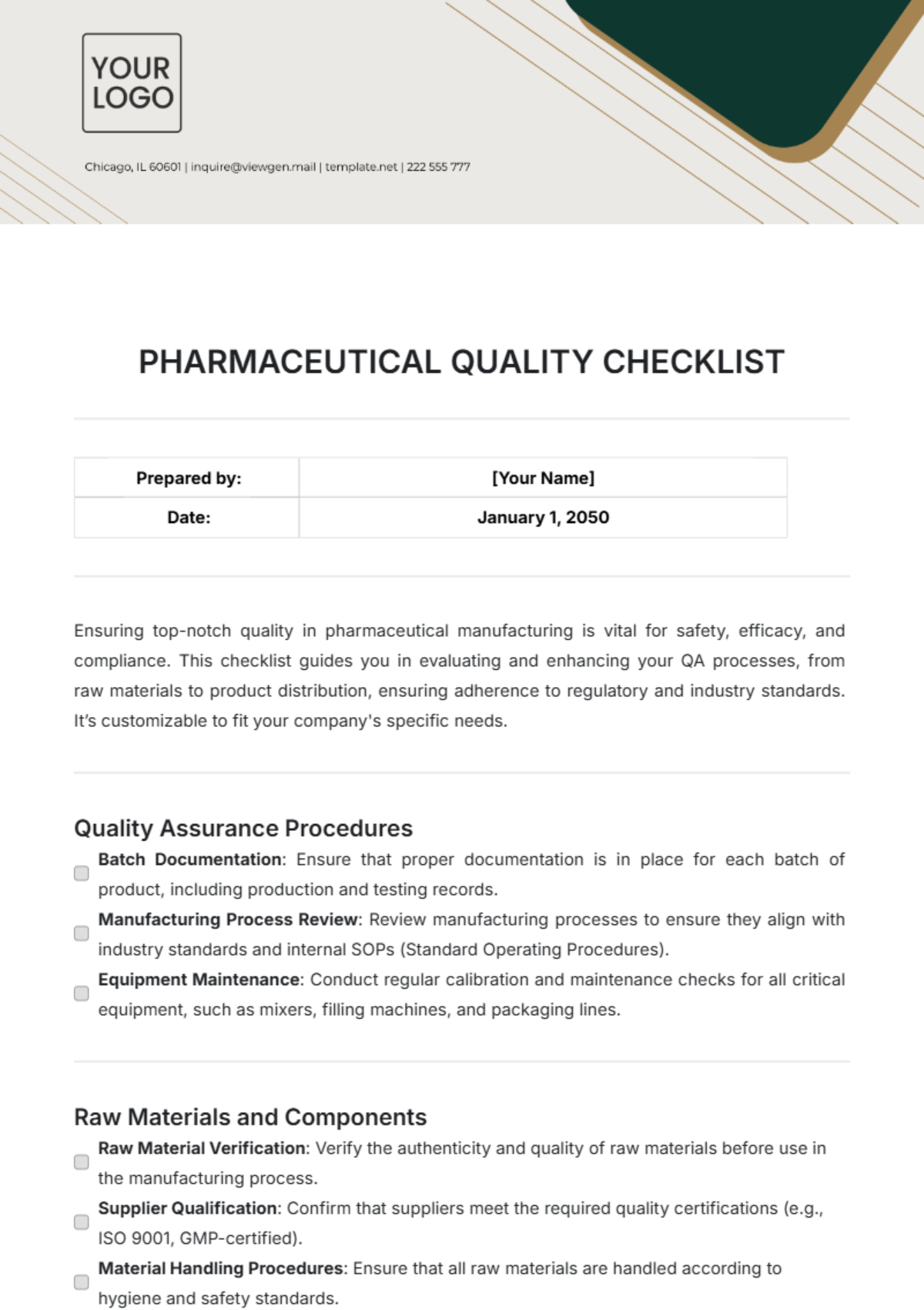
The biggest mistake pharma teams make is using AI without embedding compliance instructions into prompts.
If your prompt does not mention label restrictions, the AI may generate:
- Off-label uses
- Unsupported claims
- Comparative superiority claims
- Safety omissions
A compliance-aware prompt includes instructions like:
- Use only on-label information
- Do not compare with competitors
- Include safety information summary
- Avoid absolute claims such as best or most effective
- Maintain fair balance between efficacy and safety
When you build these instructions into prompts, you reduce MLR rejection rates.
The Rise of Prompt Libraries Inside Pharma Companies
Many large pharma companies now maintain internal prompt libraries. These libraries include pre-approved prompts for:
- HCP email drafts
- Patient education leaflets
- Website content
- Social media posts
- Press releases
- Disease awareness campaigns
- Market research summaries
- Sales training material
This is becoming a new operational asset. Companies treat prompt libraries the same way they treat brand guidelines.
If your organization does not have a prompt library yet, it will likely build one soon.
Prompt Engineering Will Change Agency Relationships
This shift will also change how pharma companies work with marketing agencies.
In the traditional model:
- Agency writes content
- Pharma reviews and edits
- MLR approves
- Agency revises again
In the AI model:
- Pharma team generates first draft using AI
- Agency refines creative and visual strategy
- MLR reviews
- Agency finalizes assets
This reduces agency dependency for basic content drafting and shifts agencies toward strategy and creative direction.
Skills Pharma Marketers Need Now
If you work in pharma marketing, the skill set is changing. You do not need to become a programmer. You need to become good at structured thinking and instruction writing.
Key skills include:
- Writing structured prompts
- Understanding clinical data
- Understanding compliance language
- Editing AI-generated content
- Asking analytical questions to AI
- Using AI for competitive intelligence
- Using AI for segmentation and messaging
Prompt writing is becoming as important as PowerPoint and Excel in pharma marketing roles.
The Strategic Question You Should Ask Yourself
Ask yourself something simple. If two pharma companies use the same AI tools, what creates the difference in output quality?
The answer is prompt quality, data quality, and human review.
AI will not replace pharma marketers. It will replace marketers who cannot use AI effectively.
Prompt engineering is not a technical skill. It is a communication skill. And pharma marketing has always been about communication.
The difference now is that you are communicating with both humans and machines. The teams that learn this fastest will produce more content, test more campaigns, generate more insights, and move faster than competitors.
That is why prompt engineering is no longer a niche skill. It is becoming a core capability for pharma marketing teams.
References
McKinsey Report: The Economic Potential of Generative AI in Life Sciences
https://www.mckinsey.com/industries/life-sciences/our-insights/the-economic-potential-of-generative-ai-in-life-sciences
Deloitte: Generative AI in Pharma Marketing and Medical Affairs
https://www2.deloitte.com/us/en/insights/industry/life-sciences/generative-ai-pharma.html
Accenture: AI and the Future of Pharmaceutical Marketing
https://www.accenture.com/us-en/insights/life-sciences/ai-pharma-marketing
FDA Guidance on Promotional Labeling and Advertising
https://www.fda.gov/drugs/labeling/promotional-labeling-and-advertising
European Medicines Agency Promotional Compliance Guidelines
https://www.ema.europa.eu/en/human-regulatory/overview/marketing-authorisation
IQVIA Report: AI in Commercial Pharma
https://www.iqvia.com/insights/the-iqvia-institute/reports/artificial-intelligence-in-commercial-pharma
